
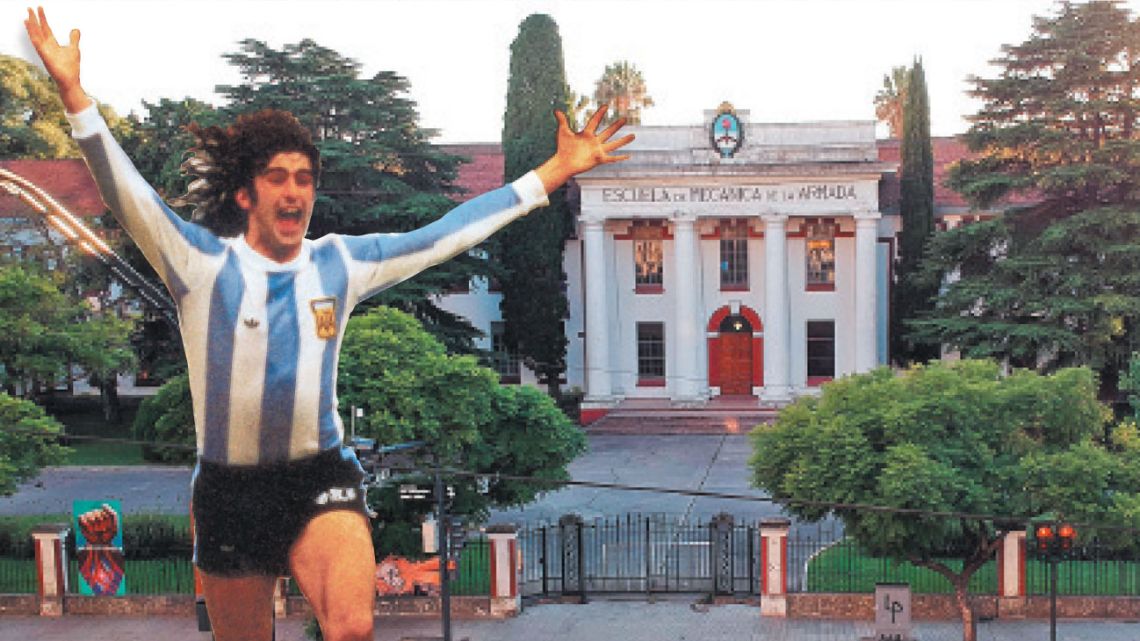

It is 5:40 p.m. on June 25, 1978. Argentina has just won the World Cup for the first time, the stands explode, the streets begin to be covered in light blue and white, the horns are activated; the one who does not jump is a Dutchman. At that exact moment, Lieutenant Commander Jorge Acosta greets each detainee with a handshake and each detainee with a kiss. I finish watching the final on a black and white device at ESMA along with other officers and a group of missing persons. He is elated. “We won, we won!” the Tiger yells at them. Outside everything is celebration, relief. At the Monumental, the players hug each other, cry, thank heaven. Nothing and no one can overshadow this party of all. José María Muñoz sentenced from the cabin: “Football has made the miracle of the country, of this wonderful country, attacked by those who do not know us.” The echo of Muñoz’s harangue reaches the collective cell of the El Banco clandestine center, where Guillermo Möller is still lying, sold, handcuffed, almost naked. A group of tasks kidnapped him at the Chacabuco 1181 pension, in San Telmo, a few hours ago, before he started the final. The prod session left him barely conscious. He does not register the shouts of the guards or the horns that come from the Riccheri.
It is 5:40 p.m. on June 25, 1978 and at this moment, in this intense and terrifying moment, in the country of 25 million Argentines, emotion and horror, naivety and sadism, screams and screams are mixed.
Because the 78 World Cup is not only the goals of Kempes, the covers of Pato Fillol and the streets taken over by millions of Argentines. The first star is also the thousands of disappeared that on June 25, 1978 at 5:40 p.m. suffered that unparalleled sporting event in clandestine centers and that the leaders of the dictatorship tried to confine in the basements of memory.
The slave who films. Carlos Bartolomé is on one side of the Monumental playing field. He arrived with a camera, a tripod and a mission: to record the World Cup final. He takes the referee Sergio Gonella when he blows the whistle and Omar Larrosa when he comes running to ask him for the ball. He zooms in on Tarantini and Pato Fillol when they give each other that hug from the soul that will be eternal. He registers Luque when a stranger wants to snatch his shirt. He focuses on Passarella standing on the shoulders of who knows. He opens the shot to take in the rest of the players who are upset, running, jumping and mingling with photographers and cast that cloud the scene.
Carlos records everything. He does not know the fate of these tapes, but he records. He has to record. He is required to record. The presence of the guard that he has next to him reminds him all the time that his mission is to record. Before he was kidnapped in May 1976, Carlos had been a member of the Peronist Youth and a producer of audiovisual media. For this reason, at ESMA, the repressors demanded that he record television reports that they were going to use as propaganda. He traveled to Mar del Plata to film fashion shows and they even took him to Madrid to make a documentary about Fashion Week and Argentine Art. He is a missing person who survives as a slave. In an hour, when they finish handing out the medals to the world champions, he will return to the Esma, he will return to the blindfold, to the shackles, to the horror.
The relief of a triumph. Mario Villani is in the El Banco clandestine detention center with the cell door open, his eyes fixed on the television and a feeling of relief that loosens his muscles. He is 38 years old and six months ago an Army mob kidnapped him when he was leaving his house in Parque Patricios. Because of his knowledge of electronics, they use him as slave labor to repair devices that are stolen in the operations. The old television where they can watch the World Cup matches, for example, was fixed by Mario. That black and white screen kept him tense for three hours. Only now those players in ecstasy and the stands full of fans with light blue and white flags relax him. Mario and the compañeros and the compañeros kidnapped in that clandestine center needed more than anyone for Argentina to come out champion. But not for passionate reasons. Two weeks ago the National Team lost to Italy, the torturers were merciless with the detainees and applied more violent and perverse prod sessions than usual. Another defeat, and in the final no less, would have been intolerable.
A certain Ignacio. Laura Carlotto is in La Cacha, missing since November. When she was taken away, she was two and a half months pregnant and now her belly is bursting. She practices the breathing techniques that Rosita, another detainee, was taught. She tries to walk, but she can barely move. The floor of the cell is dirty and rough, and lying there she thinks of that baby that they are going to give to her mother Estela and to her father Guido. That was what they promised him.
The guards turned on the radio at full volume and Gordo Muñoz spreads euphoria, but Laura is indifferent to that alien celebration. She senses her destiny and trusts that her mother and her father will lovingly raise that baby that is yet to come. The repressors are going to wait for her to finish the medal ceremony to transfer her to the Military Hospital, where the next day she, blindfolded and handcuffed to a stretcher, is going to give birth to a baby boy. “You will be called Guido, like your grandfather”, she will say in his ear. Five hours later she will be taken back to La Cacha without her baby. Two months later she will be assassinated. Thirty-six years later, a certain Ignacio will know that his name is Guido.


