
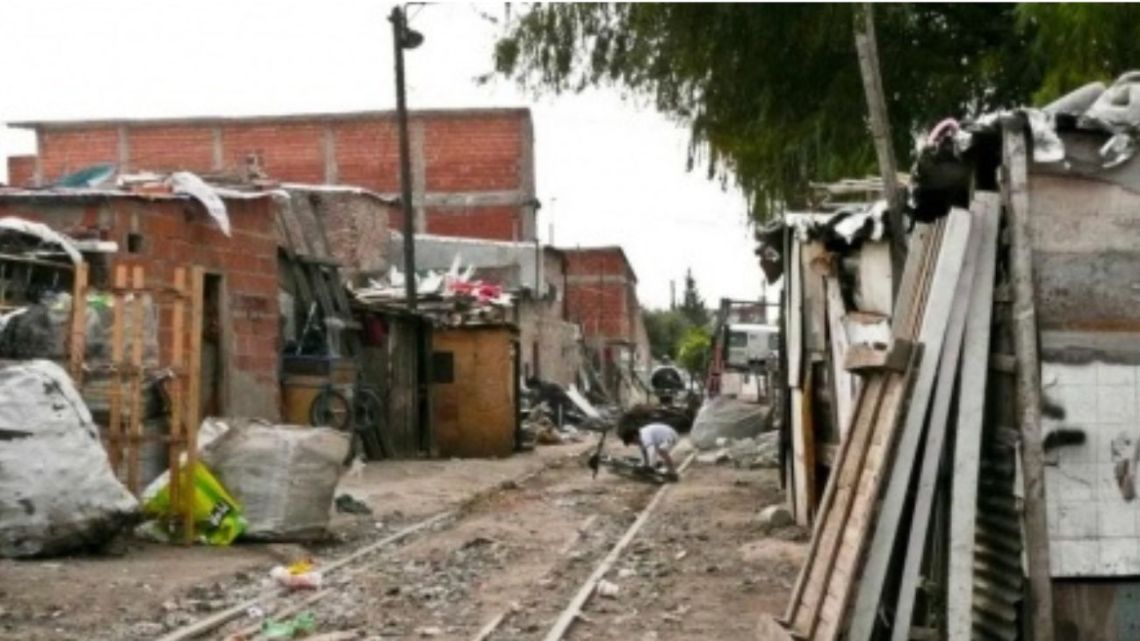

In Argentina, the high incidence of poverty is a chronic problem. For decades it has not fallen below 25% of the total population and in critical episodes, such as the 2018 macroeconomic crisis or the strict confinement of the pandemic, it approaches half of the population. Currently, 4 out of 10 Argentines are poor.
Poverty is associated with a multiplicity of factors. In order to simplify the diagnosis, it is important to distinguish temporary poverty from structural poverty. The group of short-term poor is made up of people who enter and leave this situation depending on the economic situation. On the contrary, structural poverty transcends the ups and downs of the economy. This segment constitutes a more difficult floor to drill, which explains why poverty is never less than 25%.
The most important determinant of short-term poverty is inflation and the erosion that it causes in workers’ remunerations. The phenomenon is enhanced by the very high incidence of informal work, either as unregistered wage earners, mainly in small businesses, or as non-professional self-employed workers.
The remuneration of informal workers has less defense capacity against the impacts of inflation. Therefore, increases in inflation nonetheless imply increases in poverty.
The hard core of poverty is also affected by more structural factors that transcend the economic cycle. In this sector of the population, more extreme deprivations lead to a situation of vulnerability that cannot be overcome even in more favorable macroeconomic cycles.
What can the State do?
The heterogeneous composition of poverty imposes different types of strategy from the point of view of public policies. They range from actions aimed at rebuilding income -such as income transfer assistance plans- to actions with a longer-term perspective, such as improving education and housing conditions for families.
The particularity that distinguishes recent years is the centrality of assistance transfers. In the last 10 years the amount of increased benefits increased by more than 100% and reaches 4% of GDP.
Despite the fact that investment in assistance has reached unprecedented levels (which nevertheless entails sacrificing other functions of the State) the incidence of poverty has not decreased. The evidence shows a worrying paradox: more is spent on assistance and poverty rises. It becomes a vicious cycle. It is a resounding failure that deserves to be evaluated with the fines of rethinking strategies.
The vicious circle has an explanation
The explanation for the paradox is that the Argentine assistance policy suffers from serious design errors that are exacerbated by several deficiencies in the instrumentation. A chaotic conformation where the political interests of its executors prevail over the interest of families in vulnerable situations.
The State executes the assistance policy in a disorderly manner in hundreds of programs under the responsibility of a large number of organizations distributed in the three levels of government. The first consequence is that vulnerable households are forced to manage assistance aid at multiple windows. Overlapping leads to the same people, for the same need, receiving assistance through different mechanisms. This not only complicates the lives of vulnerable families, but multiplies administrative costs, inefficiencies, and opportunities for corruption.
To make matters worse, in several cases the management of social assistance is privatized in the piquetero organizations. The most emblematic, but not the only one, is the Potenciar Trabajo Program. These organizations act as “employers” of cheap labor financed with state money. The submission of people to the guidelines set by the leaders of the organizations reaches extreme situations such as those currently made public in Chaco and some time ago in Jujuy.
To this is added that, in the current fiscal situation, the expansion of welfare spending is financed with more issuance. Excess emissions are transferred to prices and this erodes the income of the population in general, but particularly the remuneration of informal workers. At this point, a key issue that is often overlooked is that the main source of income for poor households is from informal work and not from social assistance.
Therefore, increasing the welfare spending financed with the issuance increases poverty, since the increase in income that receiving a plan means is difficult to compensate for the loss caused by the remuneration being liquefied by price increases. This vicious circle is armed that causes welfare spending to increase, and poverty increases.
skin the paradox
The most important step is to have a healthy macroeconomy. Price stability and an increase in quality jobs is by far the most progressive policy. If this is accompanied by a reconsideration of social policy, the chances of eliminating short-term poverty relatively quickly will increase.
For the hardest core of structural poverty, perseverance is necessary in investments whose results require more time to be effective, such as investment in education, health and social infrastructure.
Idesa Research Coordinator


