International

Enfocado

Navigating Global Competition: AI as a Game Changer

Artificial intelligence has moved far beyond a specialized technical niche, becoming a central strategic force that reshapes economic influence, national defense, corporate competitiveness, and societal trajectories. Entities and countries that command cutting‑edge models, immense datasets, and concentrated computing power acquire disproportionate sway. In the AI age, existing advantages in talent, financial resources, and manufacturing are magnified, while new drivers emerge, including the scale of models, the breadth of data ecosystems, and the stance adopted in regulation.Financial implications and overall market sizeAI is a significant driver of expansion. While methodologies differ, prominent projections suggest that its worldwide economic influence could reach…
Read More
Algorithmic Bias: A Public Policy Risk Explained

Algorithmic Bias: A Public Policy Risk Explained

Algorithmic systems increasingly shape or sway decisions in criminal justice, recruitment, healthcare, finance, social media, and public-sector services, and when these tools embed or magnify social bias, they cease to be mere technical glitches and turn into public policy threats that influence civil rights, economic mobility, public confidence, and democratic oversight; this article details how such bias emerges, presents data-backed evidence of its real-world consequences, and describes the policy mechanisms required to address these risks at scale.Understanding algorithmic bias and the factors behind its emergenceAlgorithmic bias refers to systematic and repeatable errors in automated decision-making that produce unfair outcomes for…
Read More
Why climate lawsuits are increasing worldwide

Why More Climate Lawsuits Are Being Filed Globally

Societies are increasingly turning to the courts to confront climate change, and the past decade has seen a sharp rise in climate‑related litigation fueled by escalating impacts, more robust scientific links between emissions and damage, evolving legal arguments, activist tactics, and changes in corporate and financial governance; this article outlines the primary drivers behind these cases, the legal avenues plaintiffs pursue, key illustrative examples, emerging geographic trends, and the practical implications for governments, businesses, and communities.Core drivers behind the rise in climate litigationMore robust scientific attribution: Progress in attribution research and climate modeling increasingly enables experts to connect particular extreme…
Read More
Why climate lawsuits are increasing worldwide

Climate Litigation on the Rise: A Worldwide Phenomenon

Societies are increasingly turning to the courts to confront climate change, and the past decade has seen a sharp rise in climate‑related litigation fueled by escalating impacts, more robust scientific links between emissions and damage, evolving legal arguments, activist tactics, and changes in corporate and financial governance; this article outlines the primary drivers behind these cases, the legal avenues plaintiffs pursue, key illustrative examples, emerging geographic trends, and the practical implications for governments, businesses, and communities.Core drivers behind the rise in climate litigationClearer scientific attribution: Advances in attribution science and climate modeling make it increasingly possible to link specific extreme…
Read More
Why climate lawsuits are increasing worldwide

Understanding the Global Increase in Climate Lawsuits

Societies are increasingly turning to the courts to confront climate change, and the past decade has seen a sharp rise in climate‑related litigation fueled by escalating impacts, more robust scientific links between emissions and damage, evolving legal arguments, activist tactics, and changes in corporate and financial governance; this article outlines the primary drivers behind these cases, the legal avenues plaintiffs pursue, key illustrative examples, emerging geographic trends, and the practical implications for governments, businesses, and communities.Core drivers behind the rise in climate litigationMore robust scientific attribution: Progress in attribution research and climate modeling increasingly enables experts to connect particular extreme…
Read More
How standards shape trade and who gets locked out

Standards in Trade: Shaping Markets, Locking Out Players

Standards encompass the rules, specifications, testing approaches, and conformity procedures that define the qualities products and services must meet to access a market, covering everything from technical requirements for home appliances and sanitary guidelines for meat to data‑protection practices and private sustainability certifications set by multinational purchasers. By cutting information imbalances and enhancing interoperability, well‑crafted standards can reduce transaction costs, strengthen consumer confidence, and stimulate trade. Yet these same standards may also function, deliberately or not, as obstacles that limit rivals, divide markets, and alter global value chains. Their distributional consequences are significant, as the gains, burdens, and exclusions they…
Read More
Why oceans matter for climate and for the economy

Understanding Oceans’ Value: Climate & Economic Benefits

Oceans serve as the world’s leading force in regulating climateThe global ocean covers roughly 71% of Earth’s surface and acts as the primary regulator of climate. It absorbs and redistributes heat and carbon, moderating atmospheric temperature swings, determining weather patterns, and sustaining life-supporting biogeochemical cycles. Two fundamental roles stand out:Heat storage: The ocean has taken up the vast majority of excess heat from greenhouse gas emissions—commonly estimated at over 90% of the planet’s stored excess heat—slowing atmospheric warming but creating long-term thermal inertia that locks in future change.Carbon sink: The ocean absorbs a large fraction of human-emitted CO2—roughly a quarter…
Read More
What safeguards exist in modern nuclear power

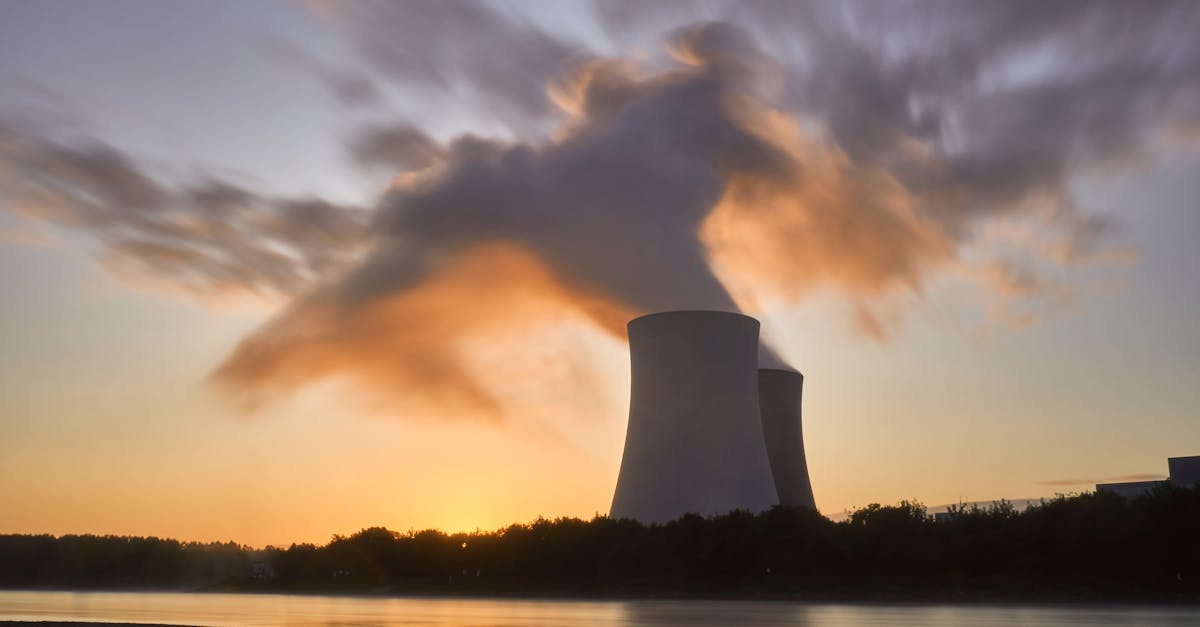
Nuclear Energy Resurgence: Why the Debate is Back

Nuclear power has re-emerged as a central topic in public and policy debates worldwide. Multiple intersecting forces — climate targets, energy security concerns, technological advances, market signals, and shifting public opinion — have combined to bring nuclear energy back into focus. The discussion is no longer purely ideological; it now centers on practical trade-offs and how to achieve deep decarbonization while maintaining reliable electricity supplies.Main factors fueling the resurgence of interestClimate commitments: Governments and corporations pursuing mid-century net-zero goals increasingly require substantial volumes of dependable, low‑carbon power. With its almost negligible operational CO2 emissions, nuclear is positioned to deliver both…
Read More
Why oceans matter for climate and for the economy

Oceans’ Contribution to Climate Stability & Economy

Oceans as the planet’s dominant climate regulatorThe global ocean covers roughly 71% of Earth’s surface and acts as the primary regulator of climate. It absorbs and redistributes heat and carbon, moderating atmospheric temperature swings, determining weather patterns, and sustaining life-supporting biogeochemical cycles. Two fundamental roles stand out:Heat storage: The ocean has taken up the vast majority of excess heat from greenhouse gas emissions—commonly estimated at over 90% of the planet’s stored excess heat—slowing atmospheric warming but creating long-term thermal inertia that locks in future change.Carbon sink: The ocean absorbs a large fraction of human-emitted CO2—roughly a quarter to a third…
Read More