

The electoral campaign is already wreaking havoc in Congress, where activity is less and less frequent, despite the needs of a government that still requires parliamentary support for various initiatives.
It is that since April the elections have been taking place in different provinces such as Río Negro, Neuquén and Jujuy, which force legislators to alternate their agendas between the City of Buenos Aires and its provinces.
For this last week, there was speculation about the possibility of a consensus session in the Chamber of Deputies, but the ruling party had four important legislators out of the country: Máximo Kirchner, Cecilia Moreau, Paula Penacca and the ally Diego Sartori, with which the quorum was even further away than usual.
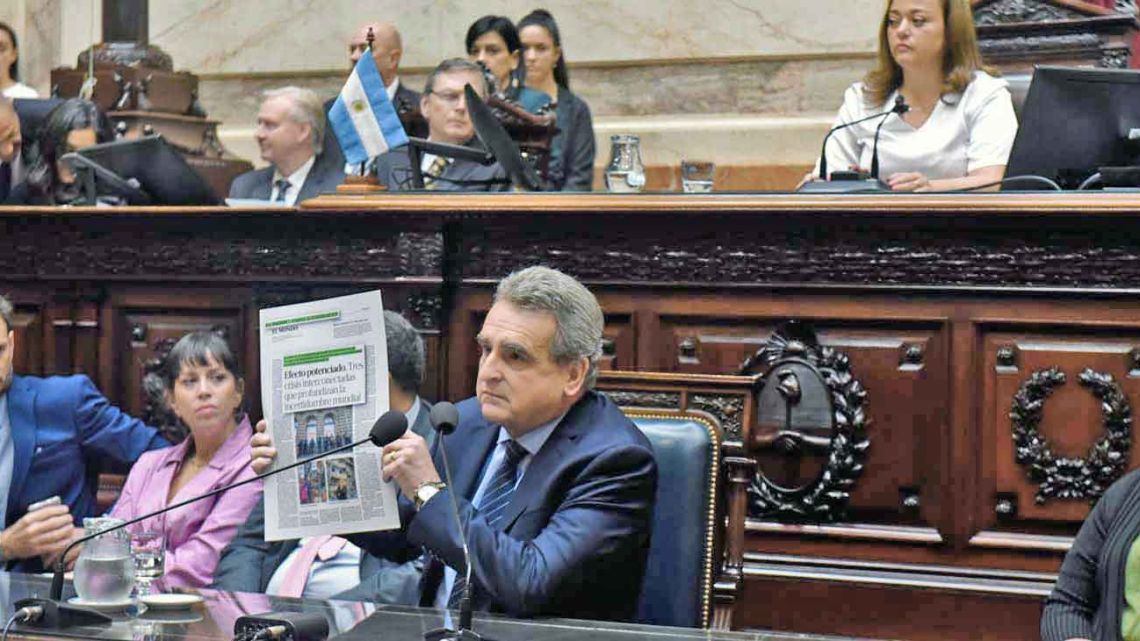
That is why the next parliamentary stop in sight could be the visit of the Chief of Staff Agustín Rossi to the Lower House on Tuesday, June 13, his third presentation in Congress since he is in charge of the ministers. The arrival of the man from Santa Fe is one of the few activities that generates expectation, also from his presidential candidacy and his role in the framework of the assembly of the Frente de Todos towards the presidential elections.
In the long list of pending issues that both Chambers have, three projects that the Ministry of Economy recently sent receive special attention. In the first place is the money laundering that is part of the tax information exchange agreement with the United States that was signed at the end of 2022 and that still does not forget to have its parliamentary support to facilitate the repatriation of funds for those who have assets in the Undeclared foreigners. The agreement with the United States has been in force since January 1 of this year, so the parliamentary tool must be urgently activated to achieve the goal of inflowing foreign currency not declared up to now. This week also entered two projects in the energy field that have the same objective: dollars to the country. On the one hand, there is the program to promote the production of Liquefied Natural Gas, with a focus on Vaca Muerta and the commissioning of the Néstor Kirchner gas pipeline. There is also the green hydrogen promotion project, with rules of the game for large investors for the next thirty years, which provides a pattern of possible consensus among the different political forces that aspire to occupy the Casa Rosada. Both projects have a turn to the Budget and Treasury and the Energy Commission, one of the two that Máximo Kirchner integrates. The fine print includes in both cases withholdings and access to foreign currency for a percentage of exports. Although it is lower than the requirements requested by the companies, it is higher than what was established in the first official drafts. The expectation of the Government is that once it is approved, it can be translated into the arrival of large investments, but the truth is that there is not even a parliamentary work agenda already underway.
A chapter closes. With the summoning of eight witnesses from different surroundings, the Political Trial Commission of Deputies will seek to close the discussion chapter on alleged irregularities in the social work of the Judiciary, one of the grounds for the trial against the four members of the Supreme Court. It is expected that the next matter to be dealt with is the performance of the courtiers in the ruling on Coparticipation, then their decisions regarding the Council of the Magistracy and the electoral suspensions in San Juan and Tucumán.
You may also like


