
Before starting to read this note, it is essential to remember that the National Law on Weapons and Explosives and the Renar Registry Manual (current ANMaC) expressly prohibit the manufacture, sale and use of the -Commonly- called silencers in the civil field. Despite these regulatory operations, it can be said that the prohibition does not prevent knowing how these devices work or that such devices are used by the armed, security and police forces, and so much so that many elite bodies use them especially when circumstances require it.
It is necessary differentiate the sound attenuators silencers and of the draft stabilizers incorporated into pneumatic weapons that work with compressed air, PCP or carbon dioxide, since although these attenuators and stabilizers have some outward resemblance to the so-called silencers, they do not bear any technical or functional similarity to the latter.

Indeed, sound attenuators used in pneumatic and airsoft guns only prevent clicking or typical sound produced by these weapons in closed environments or in shooting galleries, in order not to damage the shooter’s hearing after several shots and in practice, and for reasons of a technical nature, cannot be interchanged with firearms.
first device
Historically, and almost simultaneously with the accelerated and logical evolution of weapons, towards the end of the 19th century The way to reduce the noise resulting from the shots was already being sought. And that is how the inventor of the machine gun that bears his name, Hiram P. Maxim, develops and puts into practice a device capable of reducing the noise of shots, the one that must be placed in the mouth of the cannons and that was called a silencer.
Actually, that system not very effective in practice, although at that time many gunmen and contract killers in the United States used them against their adversaries in account definitions or in acts of revenge, which is why they proved to be very popular accessories among the underworld. Because of these facts, their sale was prohibited for common people, although as always happened throughout history, individuals who lived outside the law invented them to manufacture or obtain them illegally.
After a while, these devices fell into disusebut from the World War II, and more precisely during the decade of the ’60s, it reached its apogee, since at that time an American general –Mitchell Werbell– developed and improved the old and ineffective devices from tests carried out on the M-3 submachine guns (commonly called in English grease gun or grease guns) of caliber .45 ACP, which had been used on a large scale by the North American paratroopers during the war.
That soldier, with good technical and scientific criteria, changed the original name of silencer to noise reducer or sound. That is correct, since such devices do not really have the character of a silencer (in the US and other countries they are also called -mistakenly- suppressors). Mute means a complete absence of sound or noise, which in practice it is impossible to achieve. Therefore, it is considered that a noise reducer is effective when, coupled to the muzzle or barrel of a firearm at the moment of producing the shot, the resulting sound or noise cannot be heard beyond an integrated radius between 15 to 50 m.
Of course it depends on the weapon, the caliber, the ammunition used and the physical space where the shot occurs. Depending on the quality, shape and type of device, the noise can be reduced between 20 and 55 decibels from that produced by the explosion at the muzzle.
As measured
To understand what they are decibels (or db) it is necessary to know that its measurement comes from a scale referred to the ear response curve against the enhancement of noise. A normal conversation of 50 to 60 db; if we increase the level of noise exposure from 100 to 120 db, there will be a possible decrease or slight hearing damage, and beyond 130 to 170 db (equivalent to a shot from a horrible caliber rifle), great pain and serious hearing damage can be experienced, even deafness, depending on the exposure time, the distance and the physical location of the subject.
For what reasons can a firearm not be silenced?: some must be taken into accounts circumstances that arise negatively the performance of those reducers. One of them is the cause of the displacement of the mechanical-moving parts of the weapon and that in semiautomatic pistols, for example, suppose the movement of the slide and barrel assembly, or only of the slide at the moment of opening and closing, when implementing the loading and unloading cycle.
Another factor is the one that concerns some pistols machine gunswhere he loading and unloading cycle moves the closing block, causing noises from the shock and friction between it and other metal parts of the weapon (FMK3, PAM, Sterling). For these reasons, the elite forces prefer in certain cases the use of submachine guns that work in closed block and repeating rifles with rotary bolt (type Mauser, Remington, CZ, Sako, and Accuracy International, etc.).
Also the type of ammunition used is decisive in the performance of a noise reducer, since if cartridges that fire high-velocity projectiles are used (above 330 to 340 m/s depending on atmospheric pressure and temperature), the sound barrier will be broken as a result of the shock wave of the projectile against the atmosphere. For this reason, in some cases subsonic ammunition is used. Another not minor point is the deflagration of gunpowder. Its hot gases and high pressure push the projectile towards the exit of the barrel and, consequently, they come out of the sound reducer, making them impossible to stop and causing a minimum of noise.
Types of reducers
There are probably three models: A) those that are fixed at the end of the barrels by means of a thread or those that have a system similar to that used for the coupling of some bayonets, and that consist of a rotary-linear displacement or a lock or insurance; These are the best known and used (H&K, Beretta, Glock, etc.) for their simple models, although their effectiveness is relative. B) the coaxial or superimposed, which are more complex to manufacture than the previous ones and which became famous with the Ingram M-10 submachine gun; and C) the integrated ones, also difficult to manufacture, but more effective since they almost completely envelop the tubes-cannons of the weapons. At present, they are used on a large scale and with great success by the German Heckler & Koch MP5 SD submachine gun in its different versions, and by the British Sterling L34 A1 (MK 5), the latter used by some Argentine special commando forces during the South Atlantic conflict in 1982.
Although the noise reducers are related to clandestinity, these well-worn devices by law enforcement are of paramount importance, and are a must have for any elite troops when it comes to fighting professional and dangerous criminals like kidnappers, organized gangs etc. GSG-9 and KSK, in Germany; GIGN and the Foreign Legion, in France; Jadkommando, in Austria; SAS, in the UK; Spetsnaz, in Russia; GEO, in Spain; and the BOPE, of the Brazilian Military Police, this last elite corps is recognized worldwide as the best disorder and capable of acting in real environments in the fight against urban guerrillas.
It is generally believed that rreduce the initial velocity of projectilesbut this feature occurs only in the so-called embedded systems, since in the other types or models the speed in the mouth is maintained and in some cases it increases significantly. Also, and for obvious reasons, the build quality of the reducer and its alignment with the barrel will influence the accuracy of the shot. than if it were not used.
In conclusion, and by way of synthesis, it can be said that these systems attached to the barrels of firearms –we reiterate: prohibited for civilian use– try to trap and retain the gases resulting from the deflagration of gunpowder at the time of firing, in order to only partially reduce the noise or sound that accompanies the projectile on its trajectory.
silenced russian pistol
- A curious fact is that in the early 1980s the Soviet Union began to manufacture a unique small silenced pistol for the KGB and the Spetznas.
- The designation PSS (Pistolet Sptsialnyj Samozaryadnyj). It came in 7.62 x 42 mm caliber.
- It was interesting because of how easy it was to hide it, since it did not have or work with the classic noise reducer, but it was quieter than the traditional ones.
What about the revolvers?
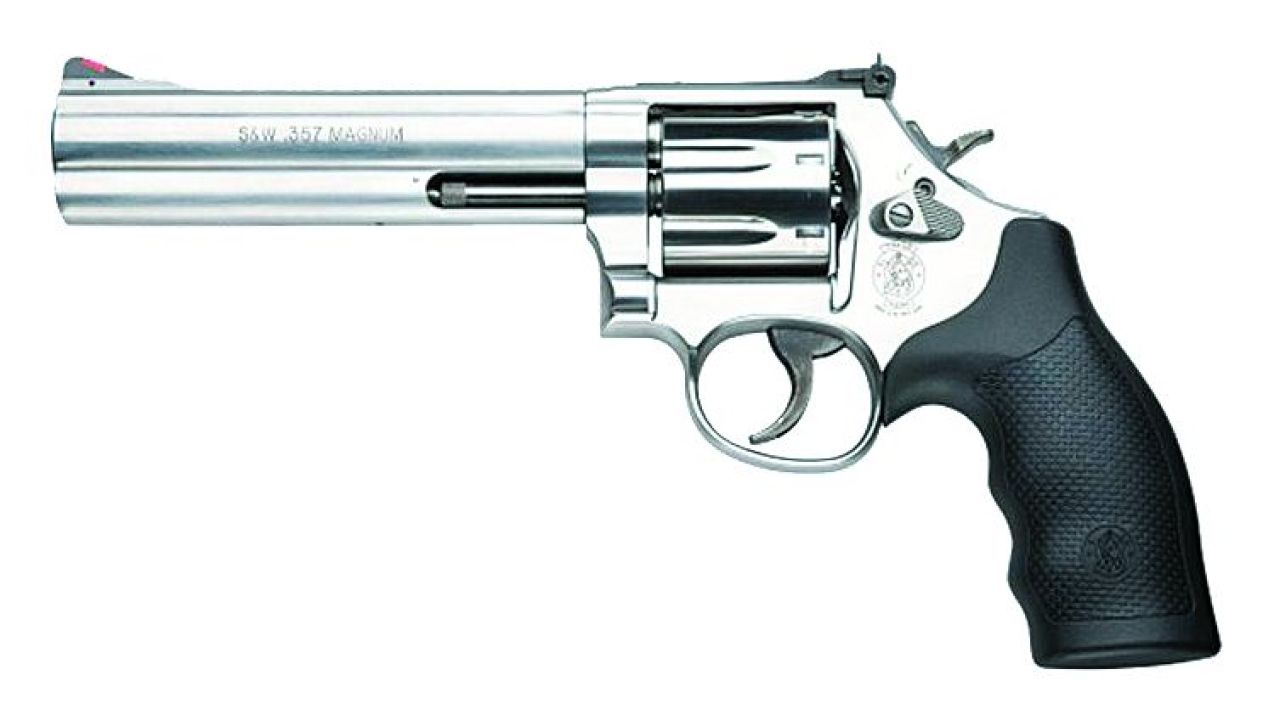
A frequent expert question is whether a noise reducer can be used in a revolver. that in practice it’s totally useless since due to the same mechanical conception of this type of weapon, the gases (which in theory would be partially trapped by this device at the barrel outlet) escape previously due to the minimum separation that exists between it and the chambers or alveoli of the drum. Due to its design and manufacturing characteristics, the revolver is a system that is not sealed.