
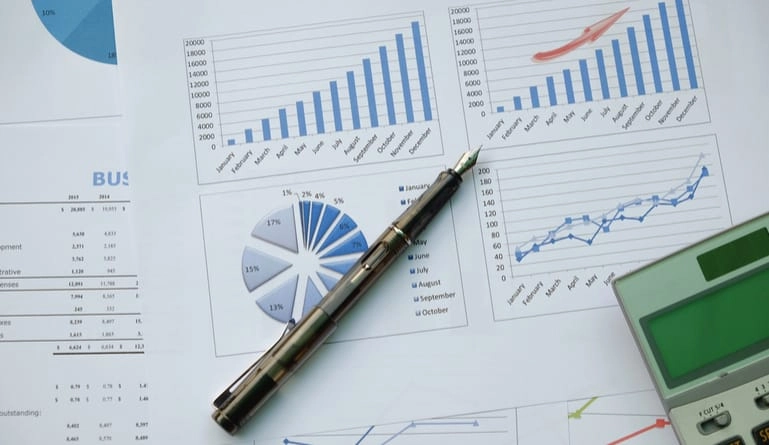

Understanding the Importance of Basic Financial Analysis
For a company to succeed, whether small or large, it is crucial to have a comprehensive understanding of its financial state to stimulate growth and make informed choices. Fundamental financial evaluations enable business leaders to assess previous achievements, recognize patterns, and foresee upcoming obstacles. This comprehension is vital for crafting budgets, formulating strategies, and interacting with parties like investors, lenders, and workforce.
Key Financial Statements to Analyze
Carrying out a fundamental examination of finances starts with collecting and comprehending the three main financial statements.
Balance Sheet: This statement presents an overview of your business’s financial position at a given point in time, showing assets, liabilities, and owner’s equity. Assets may include cash, inventory, accounts receivable, equipment, and property. Liabilities might encompass accounts payable, short-term debt, long-term loans, and other obligations. Owner’s equity reflects the value left after subtracting liabilities from assets.
Statement of Earnings: Commonly referred to as the Profit and Loss (P&L) report, this document details your income, expenditures, and costs during a particular timeframe, leading to either net gain or net loss. It assists you in monitoring revenue from sales, operational costs, cost of goods sold (COGS), and various other profits and losses.
Statement of Cash Flow: This document outlines the cash entering and leaving your company. Divided into operating, investing, and financing activities, it explains how effectively your business produces cash to fulfill commitments, reinvest, and expand.
Essential Financial Ratios and Their Interpretation
Calculating several financial ratios from these statements helps distill large amounts of data into actionable insights. Consider the following critical ratios:
Liquidity Ratios:
– Current Ratio = Current Assets / Current Liabilities. This evaluates your company’s ability to fulfill its short-term commitments. For instance, a current ratio of 2.0 implies you possess double the assets compared to the liabilities within a year, typically reflecting strong liquidity.
– Quick Ratio = (Current Assets – Inventory) / Current Liabilities. Excluding inventory from the calculation, the quick ratio offers a more rigorous assessment of immediate liquidity. If your current assets minus inventory total $50,000 and your current liabilities are $25,000, your quick ratio stands at 2.0.
Profitability Ratios:
– Gross Profit Margin = (Net Sales – COGS) / Net Sales. This reveals the portion of income left after accounting for the cost of goods sold. For instance, if sales total $200,000 and COGS amount to $120,000, the gross profit margin is 40%. Elevated margins often signify more resources are accessible for operational costs and expansion.
– Net Profit Margin = Net Profit / Revenue. This metric outlines how much profit is preserved from each dollar earned after all costs are deducted. For instance, a net profit margin of 15% demonstrates a $0.15 profit for every dollar of revenue.
Efficiency Ratios:
– Inventory Turnover = COGS / Average Inventory. This measures how frequently inventory is sold over a period. If COGS total $300,000 and average inventory is $75,000, your inventory turnover is 4, implying inventory has cycled four times in the period.
– Accounts Receivable Turnover = Net Credit Sales / Average Accounts Receivable. This ratio reveals how quickly your business collects payments from customers, signaling both efficiency and credit risk.
Leverage Ratios:
– Debt-to-Equity Ratio = Total Liabilities / Shareholders’ Equity. This highlights how much financing comes from creditors versus owners. A ratio of 1.5 means you have $1.50 of debt for every dollar of equity.
Practical Steps for Conducting a Basic Analysis
1. Collect and Organize Financial Data: Begin with accurate, up-to-date financial statements. Account for all business transactions, leaving no gaps in records.
2. Calculate Key Ratios: Use spreadsheet software to extract ratios automatically from your statements. Ensure formulas are accurate and data is recent.
3. Benchmark Your Performance: Compare your ratios to industry standards, peer businesses, or your own past performance. For instance, a restaurant’s net profit margin might be lower than that of a consulting firm.
4. Identify Trends and Anomalies: Track ratios over several months or years. Spot consistent improvements or warning signs, such as declining liquidity or a downward trend in net profit margin.
5. Diagnose Areas Requiring Action: If your current ratio drops below 1, investigate whether operational costs have soared or if receivables are not being collected promptly.
6. Draft an Action Plan: Use insights gained to set priorities, control costs, manage inventory, renegotiate supplier terms, refine pricing strategies, or secure additional financing if needed.
Case Example: Small Retail Business
Examine una pequeña tienda de ropa que intenta evaluar su salud financiera. Mediante un análisis, el propietario descubre lo siguiente:
– El índice de liquidez actual es 1.8, lo que sugiere suficiente solvencia a corto plazo.
– El margen de beneficio bruto es del 45%, lo que indica un control eficiente de los costos del merchandising.
– El margen de ganancia neta es solo del 4%, notablemente inferior al promedio de la industria del 7%. Investigando más, el propietario descubre altos gastos administrativos y descuentos excesivos.
– La rotación de inventario es de 2 veces por año, quedando atrás de los competidores que promedian 4, lo que señala existencias obsoletas o de lento movimiento.
Using this information, the proprietor opts to assess overhead expenses, optimize employee timetables, carry out focused promotions to clear outdated stock, and reevaluate the discount strategy. These measures are anticipated to help the establishment attain stable and profitable operations.
Utilizing Technology for Improved Understanding
Modern accounting software and financial management platforms can simplify analysis by automatically generating financial statements, calculating ratios, and producing visual dashboards for easier interpretation. Even small businesses can access cloud-based tools that integrate with banking and sales platforms, reducing manual errors and saving time. Many solutions offer benchmarking features, enabling real-time comparison with industry data.
Common Pitfalls and How to Avoid Them
Effective financial analysis requires precision and critical thinking. Be wary of these typical mistakes:
– Relying on outdated or incomplete records, leading to flawed conclusions.
– Focusing exclusively on profit, neglecting cash flow, which can trigger solvency crises even in profitable companies.
– Comparing your data to irrelevant benchmarks, such as national averages that do not reflect your specific sector, size, or region.
– Misinterpreting ratios without context, such as overlooking seasonal trends or extraordinary one-time expenses.
Developing even a basic comfort with financial analysis empowers business owners to see beyond surface-level performance. Instead of driving decisions by instinct alone, structured analysis fosters resilience, adaptability, and strategic clarity. Regular review of key ratios and trends turns numbers into meaningful narratives, guiding each step forward for your business’s financial journey.


