
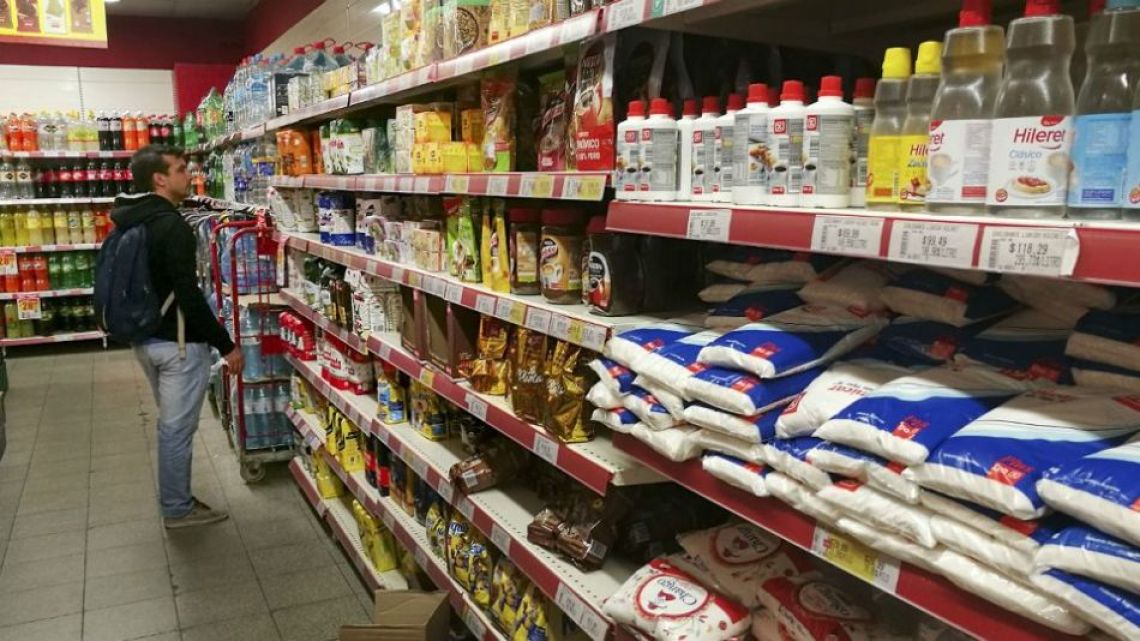

Food prices increased by 42.2% in local businesses in the Buenos Aires suburbs in the first four months of 2023.
During April, inflation Delaware food in the suburbs showed an accelerated pace, contributing to the bullish trend that has been registered in the first quarter of the year. This is indicated by the monthly survey carried out by the Institute for Social, Economic and Citizen Policy Research (ISEPCI).
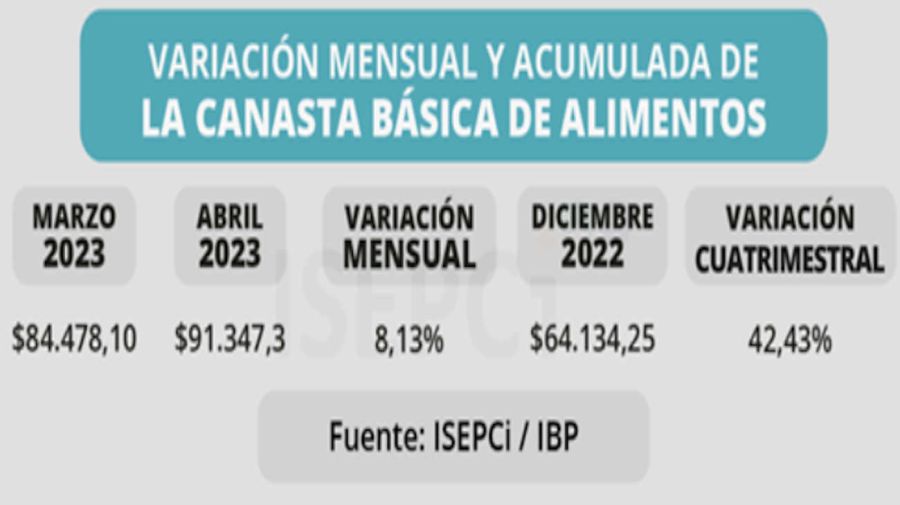
The study conducted in 900 local businesses in 20 suburban districts from Buenos Aires revealed that the cost of Basic Food Basket (CAB) for a family consisting of two adults and two children little ones achieved the $91,347.30 on April.
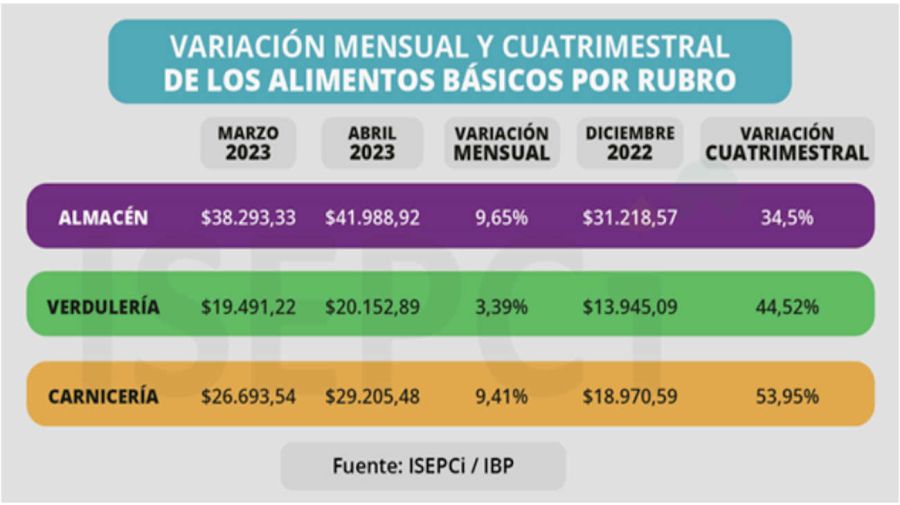
Also, that the items that experienced The largest increases were those of Warehouse (9.65%) and Meats (9.41%)while the Fruits and vegetables registered an increase of 3.39%. Compared to the month of March, products increased by 8.13%when the value of the food basket was at $84,478.10.
Accelerating inflation: the price index is expected to be higher than in March
According to the report then, the first quarter of 2023 accumulates an increase of 42.43% with the increases that left April. So far this year, meats increase by 53.95%fruits and vegetables a 44.52%and warehouse products 34.50%.
”This quarterly increase in Basic Baskets it is the highest in the last five years”, maintains the ISEPCI. And he adds: “The incessant increase in the prices of basic consumer products, They have no correlation in the increase in salary remunerations, retirements, social allowancesespecially of those who received the minimum”.
The situation is critical in the Buenos Aires suburbs
“The direct consequence is the maintenance since years of poverty at levels around 40% and homelessness around 8% of the total population”, warns the document.
We make these relevant in Popular neighbourhoodswhere people with fewer resources live is the vast majority, buy in local businesses because in these areas there are no outlets for the big chains,” he told PROFILE isaac rudnikISEPCI Director.
“That means to be able to go shopping in large chains people would have to travel great distances and to make a monthly or biweekly purchaseThey do not have the resources to do it”, he explained.
As explained by the director of the Institute for Social, Economic and Citizen Policy Research, this is due to the fact that most of the people who inhabit these neighborhoods They have informal jobs and are paid by the day or weekly.
“That pushes them to buy in local businesses that, in general they have no precious or righteous care because the wholesale chains not enter into price agreements and the reference values are generated on the basis of agreements with the large chains and wholesalers never sit in those agreements”, denounces Rudnik.
The consequences: food consumption falls and people’s pockets are detonated
So, a product like oil that in the supermarket is within the price agreement you can get $400 or $450 for a liter and a half bottle. On the other hand, in local businesses they have to buy from wholesalers they sell it for $900 so in the neighborhood store people access oil at $1,100 or $1,200“, said.
Likewise, Rudnik commented that Although there has not been a survey on the fall of consumption in the popular neighborhoods of the suburbs, the comments of the butchers and grocers and in general of the merchants, is that sales are falling precipitously.
BM / DE
You may also like


