
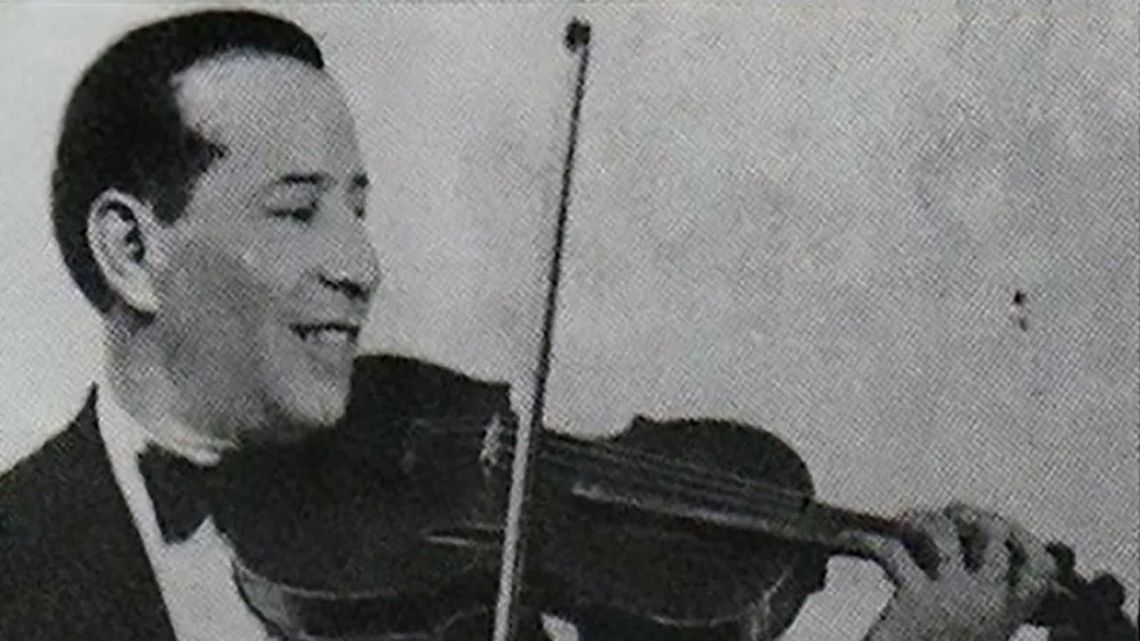

He tango it preserves thousands of particular, exotic and even unreal stories. When it was not yet a product for export, when it was a movement that was being built day by day, when Carlos Gardel had not yet defined everything, there was a picturesque, strange and dangerous character who has a very particular story, ernest pontiusalso know as “the kid ernesto”.
His life seems copied from a tango. Born in 1885 although some historians doubt even that date of birth, he began playing the fiddle very young and studied at the music conservatory of albert williamsOutstanding composer and music teacher.
But the loss of his father at the age of 11 plunged his family into poverty, and the “Kid” got used to going out to play ‘for chirolas’, for a few coins, making music with his violin at the door of the houses to in exchange for alms or in low-life bars, where tips were more important, since the ‘scruchantes’ took advantage of their art to steal wallets…
Over the years, his art gradually progressed and he had his brand of identity to incorporate the “pizzicato” (technique that consists of pinching the strings with the fingertips in instruments such as violin, viola and others) in the tangos he plays.
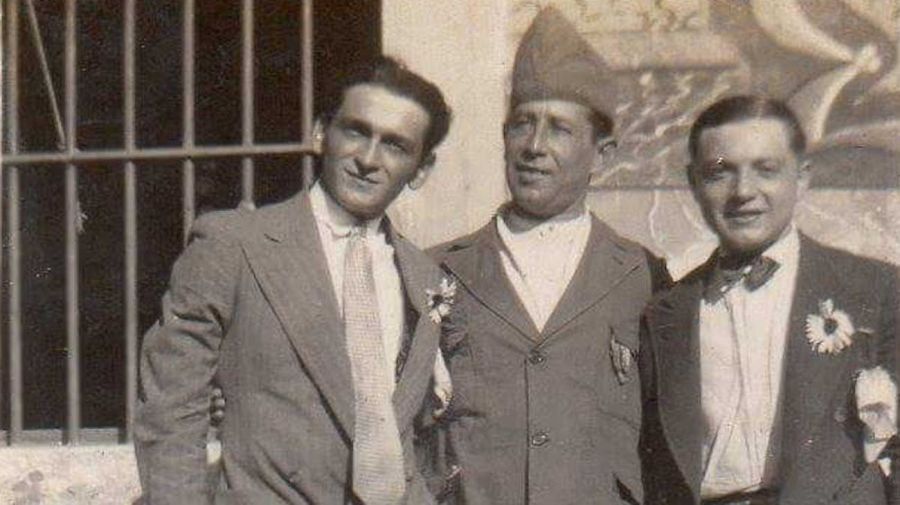
The trio he formed with his friends Juan Carlos Bazan and the “blind” Azpiazu He was taking flight and performing in different venues of different “category”. Clandestine premises, taverns, cafes, dance halls and others were her settings. In those places she premiered her most famous work, “Don Juan”that is still being played today.
“The tango ‘Don Juan’ and the milonguera invention of the mischievous pizzicato of his compadrito violin were the two fundamental contributions of Ernesto Ponzio in the structural creativity of dance tango, of tango to be danced”, defined it luis adolfo sierra.
But the limitation was the cabaret. Ponzio, for musical reasons, preferred smaller places to perform, in order to continue with a modest formation, as tango was played in the early years of the 20th century. Making the leap to bigger venues would have forced him into more numerous musical formations than a trio…
And when he was adjusting to a life as a musician, a fight over next to nothing that ended in murder condemned him to 20 years of imprisonmentlegal accessories and costs, having to be imprisoned for an indefinite period once said sentence has been served in a place in the Southern Territory of the Republic”, said the judicial sentence.
The crime happened on January 18, 1924 in the Pichincha neighborhoodin Rosario. According to the newspaper La Capital in those days, “A dark man was shot to death… as a result of an altercation due to current issues, the subject Ernesto Ponzio fired a revolver shot at Pedro Báez, an Argentine, single, 33 years old… The projectile penetrated Báez’s chest and caused him instant death.”
Ponzio already had a case for injuries against Coronel Suárez and in 1907 he had been arrested for injuries with a firearm, for which he was sentenced to two years in prison.
Recidivism in crimes increased the penalty at the time of sentencing. However, the good behavior in prisonthe influences that moved around it and changing the witness statementthe “countryman Díaz” alleviated his sentence and he did not spend more than four years and a few months in prison.
When he was released from prison, he resumed his work as a musician, although his lack of discipline gradually overshadowed his career. The businessman Pascual Carcavallo hired him to perform a series of presentations as a member of the Guardia Vieja orchestra together with Juan Carlos Bazán, among other musicians at the National Theater. He later joined and directed the Ponzio-Bazán Typical Orchestra, with which he played at Luna Park.

Despite its importance within the evolution of tango, no recordings left of his interpretations, except for his participation in the first Argentine sound film, Tango!, which is already one hundred years old, where he interprets his most famous work, “Don Juan”.
In that same 1933 he participated in the play De Gabino a Gardel, along with ‘Mudo’ and a great cast.
On Sunday, October 21, 1934, at noon, he began to feel bad and moments later he had a heart aneurysm. “Kid Ernesto The genitor of tango. Ernest Pontius. RIP October 21, 1934. Always in my heart. Your wife” reads a bronze plaque that remembers him in the Lanús cemetery in Buenos Aires.
“Tango!”: Behind the scenes of the first Argentine sound film, which shocked Hollywood
his widow, Adela Savino, which was done at the age of 16. she accompanied him in his years of splendor and also during his imprisonment, he recalled “Ernesto’s father had been a harp teacher, and he accompanied Adelina Patti at the Opera theater. All the Ponzios suffered from the heart. The ‘Kid’ studied with the first violinist from Colón”, he recounted in his old age. “He was brave but very fair. He couldn’t resist a felony. But he was also forgiving and forgetful. The bad thing is that when he had two drinks too many, he would remember again and collect the bad deeds, “he told Miguel Angel Lafuente, who published his testimony in a book called” Ernesto Ponzio “, together with the aforementioned Sierra and Roberto Seals.
Other works by the author were “Ataniche”, “18 carats”, Avellaneda and Culpas ajenas, recorded by Carlos Gardel himself,
You may also like


