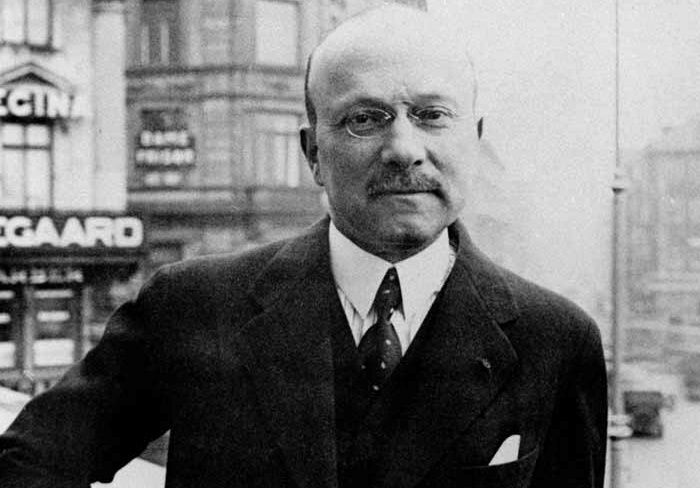
André Gustav Citroën was born on February 5, 1878 in Paris and as a result of his father’s suicide he was forced to work at a very young age in the family gemstone business.
During his youth he became interested in the avant-garde work of Jules Verne and was introduced to engineering during the construction process of the Eiffel Tower.
At the age of 22, he graduated as an engineer from the Ecole Polytechnique de Paris dedication and first developed his profession working in a gear factory.
In 1908 he was hired by the Mors family to work at their eponymous automobile company, a very determined but debt-ridden brand.
Citroen played a fundamental role in the resurgence of Mors, obtaining the necessary financing to multiply production with a high rate.
In parallel, they founded the “Sociedad Anónima de Engranje Citroën”, created to manufacture gears with particular attention to those with V-shaped spikes, which would end up being the emblem of the future automobile brand.
With the outbreak of the First World War André Citroën was recruited by the artillery regiment of the French army.
Noticing the lack of ammunition, he offered his knowledge to the government, which would end up improving his factory to take charge of the production and supply of weapons.
After the war ended, Citroën resumed his career in the automotive industry and converted his arms factory into a car manufacturer.
Inspired by the model of Henry Ford, and convinced that the future of the automobile was not in the elite but in the great diffusion, he absorbed the Mors operation to create his own firm.
The Citroën brand was founded in March 1919, becoming the first European car manufacturer to use chain work methods.
Citroën’s debut model was the “10HP Type A”, the first French left-hand drive car that claimed to be the first mass-produced European car.
The brand quickly established itself with success, however in 1934 it was declared bankrupt.
A year later, months before failing, André Citroën transferred his shares to the Michelin company, which kept the firm alive.
On July 3, 1935, André Citroën, founder of the French automobile manufacturer, died.
The story is also news. RadioProfile. Script by Nicolás Ziccardi and locution by Pita Fortín.
Introduction: When Abstraction Becomes IndispensablePure mathematics has often been pursued for intellectual beauty rather than…
Understanding Corporate Breakups for Abusive PracticesAntitrust law exists to prevent companies from abusing market power,…
Minimizing client attrition while maintaining pricing integrity ranks among contemporary commerce's most intricate hurdles. Buyers…
Introduction: Science as a Turning Point in Public AwarenessPublic perception regarding climate change did not…
1. Warren Buffett – The Discipline of Value and PatienceKey Strategy: Acquire wonderful businesses at…
1. The Telegraph Messenger IndustryBefore telephones and digital communication, businesses and governments relied on telegraph…