
Text by Rodolfo Agustín Perri.
I must, out of ethical obligation and fond memory, locate the protagonist Miguel, “el Negro”, a nickname obtained from my readings of “The Prisoner of Zenda”. The son of Calabrian immigrants, a large part of whom settled in the southern neighborhoods of the city, perhaps to keep their native tradition of being “people from the south”, Miguel was thin, with brown skin and curly black hair. Spare, brooding, he would meet me in the afternoons, at the corner of Lanza and Somellera, an unknown corner that, by then, had just begun to be paved. The corner was our humble “Tower of Panoramas”, our den of dreams, and there, my friend listened to my fiery legends of fabulous fishing and impossible jungle hunting. His black eyes, always bright, repeated the images that he was pouring into my stories about passages by Emilio Salgari, our dream mentor.
Already in adolescence the possibilities of some excursions arrived, which reached, with great difficulty, the trip by tram to Puerto Madero and from there, on foot, to the South waterfront. On that bank, and in summer, catfish and patíes consoled us; and in winter, deprived of capital to build a team of pejerrey, not even that.
One day we changed our compass and someone spoke of “La Quinta del Molino” and the “Las Terceras” lagoons (because there were three). By then “El Tano Genaro”, the most tenacious of the group, had his cart and his dwarf mule, “La Cambicha”, being capricious and unpredictable, perhaps because of his mestizo condition and his almost pathological height. Even so, it had the strength of a normal mule and the cart seemed to us the height of comfort. As with young people, minutes were enough to compose the details of the excursion. Genaro was the pilot, Miguel the commander, the twins -two blondes modeled on each other-, the providers of the sacramental roast, and I, together with my brother, to conclude some lines to try, we did not know at all, what kind of fishing . The date, the following Sunday.
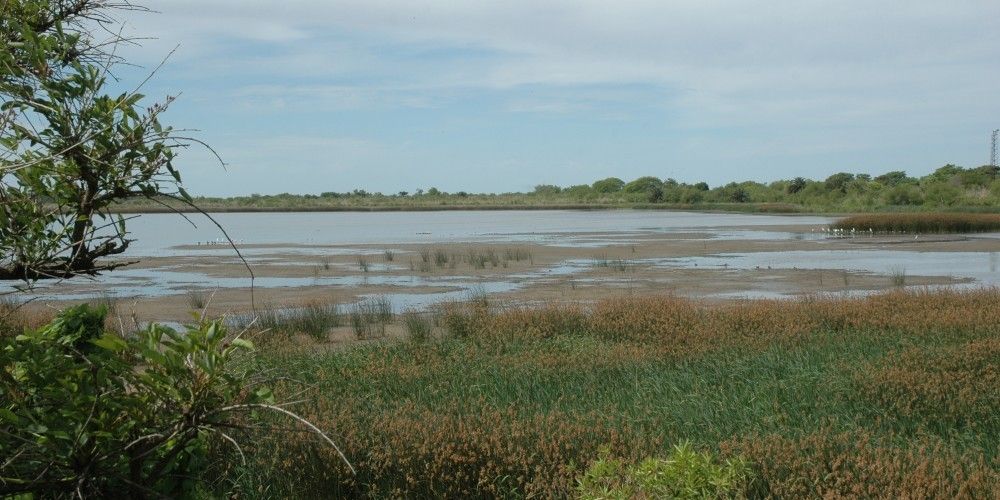
From our corner to the famous quinta we did, I think, about seven kilometers, with the inevitable detours due to the presence of fences and ditches. We covered that distance, one way, on foot, between jumps, races, challenges and the need to shake off the polar cold at dawn in July. We continue along Avenida Riestra, which later became a dirt road and, finally, a path lined with thistles and weeds. The mill would have been, once, part of the lots cast by the colonizers between officers and troops, back in the time of the first advances. Little by little, and the Indians in the area were removed – or killed – the properties acquired a glimpse of limits and marks, and the houses were raised, like fortresses. Non-existent boats and some beams pointed to a splendor that was once upon a time. But, yes, there were no more… The Third! The water was clear, free of all debris, simply because there was no population to be seen there. We were literally alone.
“El Tano” suggested that I look for some firewood; the twins finished inflating number 5; and soon, the whole group dedicated themselves entirely to enjoying that day, which I can think of today, bright and sunny like few others. The truth is that we tied La Cambicha to a paradise, in a place where the grass reached up to her belly, we started the fire and set up the grill. Miguel, of course, Miguel was walking through the trees his brooding and natural sullen gesture. He returned when the crackling of the churrascos brought us together, like soldiers, before a bugle call. We saved a rest “for the night” and we tended to wake up a certain drowsiness, of no more than two glasses of wine each.
The first to revive was Miguel; and a laconic: “to clean the grill”… he forced me to accompany him. And there we went, with the artifact, to the edge of the water. I remember that it was past noon, and the frost as thick as a finger thick continued to mobilize the banks and hold, without cracking, the stones that we threw comparing distances. We were going to resort to the simple method of unloading the irons on the ice, when Miguel, motionless, with his index finger pointing to the water, murmured:
– “Look, what are those bugs?”
Against the shore, all at the same distance, as in a formation, were they… the tarariras! It will never be known how much they weighed, on the other hand, they did have the same length that I calculate in about forty centimeters, minimally.
I didn’t even stop to think; I entered the ice and, defended by the slippers, I approached the fish, sank my hands, hurt myself a little with the icy splinters, closed my fingers around the cylindrical and viscous body and, there it was through the air, that the first prey fell on the grass, where it lay motionless.
-“What a pity, they are dead”, Michael said.
And then a hint of halieutic knowledge arose that, with the passage of time, I was able to confirm:
– “No!, they are asleep, it is the winter dream. Go Go! They’re going to wake up.” I yelled eagerly and advanced in pursuit of another easy catch.
The rest joined us within seconds. I don’t know we got caught. Some floated in the semi-darkness of the deep water but up to that point we didn’t dare.
The mule, surrounded by grass, began a trot that we helped, until the cart gained some momentum.
There we got to our corner, hoisted the crate and went into my house, straight to the bathroom. We fill the bathtub with lukewarm water and throw them in; After a few seconds, the sleepy fish, revived, now, due to the temperature, started running madly in the narrow container until we were drenched.
They were alive! And that same night, they were fried, with salt and lots of lemon, ceremoniously.
by Juan Ferrari
image gallery