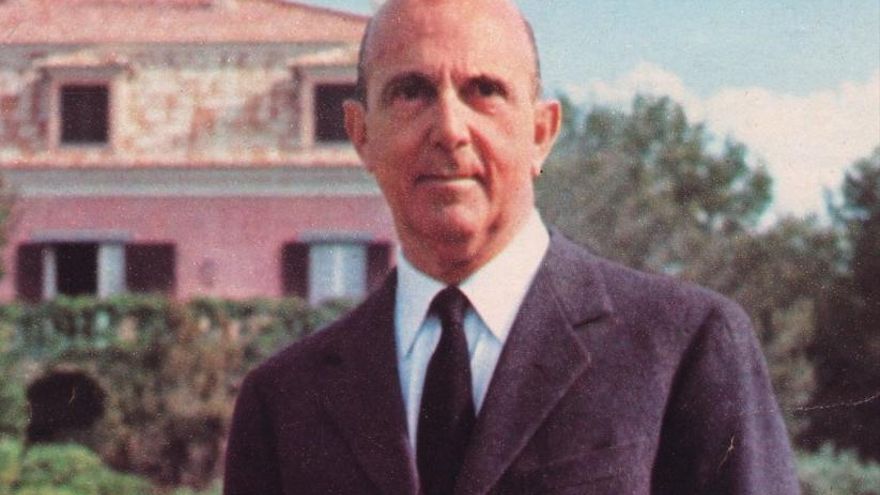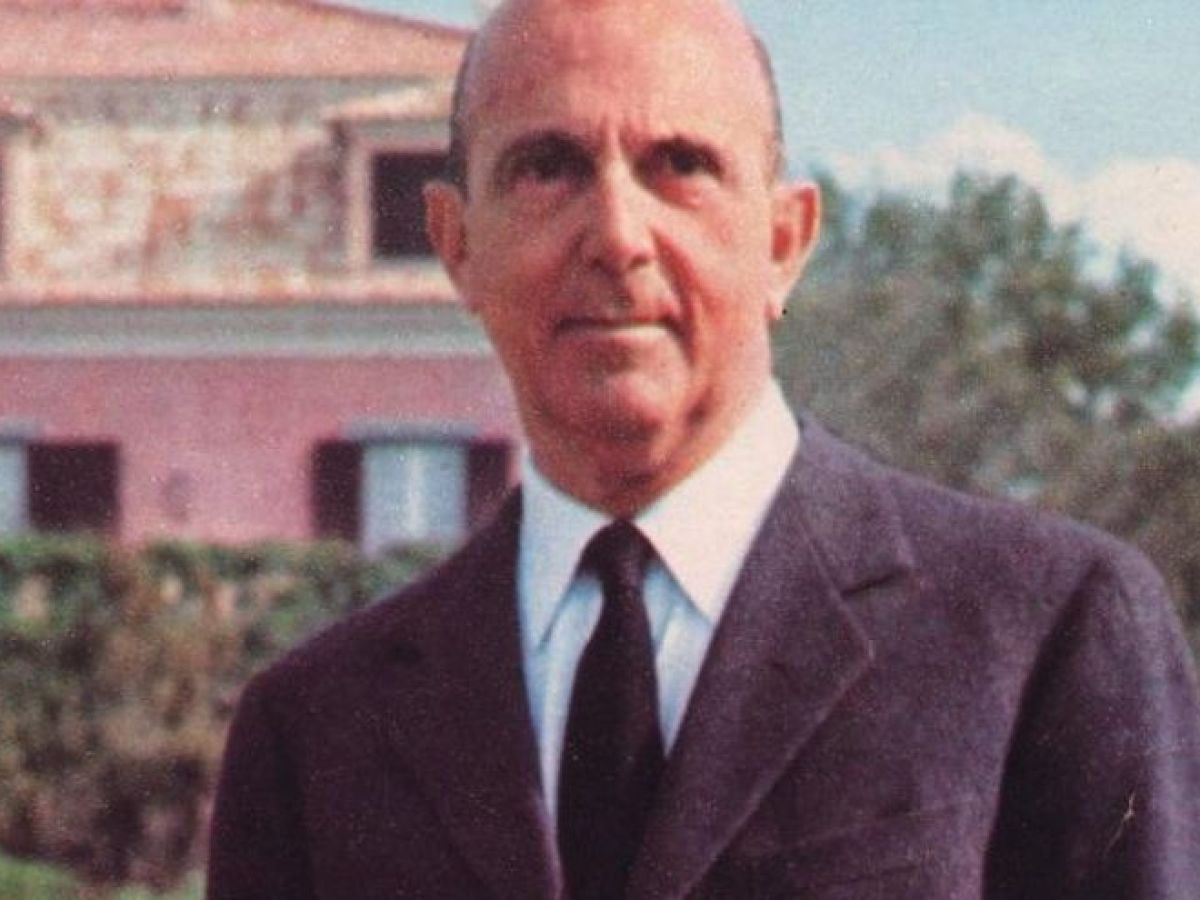

Humberto Nicola Tommaso Gennaro Maria di Savoia, Prince of Piemonte, was the third of the children of the marriage that occurred between Victor Emmanuel III and Princess Elena of Montenegro.
In 1923, he was made a knight of the Insigne Order of the Golden Fleece by King Alfonso XIII of Spain.
It was in 1924 when he began a diplomatic tour of several South American countries, and among his destinations was Argentina.
On August 6 of that year, he disembarked in the port of Buenos Aires and was received by the then president, Marcelo Torcuato de Alvear, and toured a good part of the Interior for several weeks.
There were even provinces, as in the case of San Luis, in which the day of his visit was declared a holiday, while he was received by a huge retinue made up of a good part of the cabinet at that time, and the Italian colonies settled in the country.
Years later, more precisely in 1930, Humberto married Princess María José of Belgium, and they had 4 children.
Fast forward to May 12, 1944, when he became “lieutenant of the Kingdom of Italy.” The monarch’s life would change forever after a message transmitted via radio by his father following the liberation of Rome by allied troops during World War II.
During those years, royalty in Italy was closely linked to the fascist party of Benito Mussolini. This caused the image of the crown to be seriously damaged, and became, some time later, the main cause of its disappearance.
We move on to May 9, 1946. King Víctor Manuel III abdicated in favor of his son so that the family could gradually recover its brilliance.
However, that did not happen. Humberto governed for only 33 days, with which he was known as “the King of May”, and he did not have any type of authority for the Italian society of that time. Even for a good part of the population, the King was still Víctor Manuel Tercero, living in exile.
On July 2, 1946, in an election disputed by the monarchical sectors, the Italians opted for the Republic as a form of State. After this result, Humberto II left for Portugal, to later settle in Switzerland and die in 1983, at the age of 78, without having been able to realize the dream of stepping on its soil once more.
For his burial, he asked to be buried with the royal seal of the Savoy family, which was taken as a sign that the inheritance of the monarchs of Italy had expired with him.
Currently, for the legitimist realist current, the heir to the throne is Víctor Manuel de Saboya, son of Humberto, and who was able to return to the country only in 2002 thanks to a constitutional reform that prohibited the entry and permanence of members of royalty, and through the intercession of then Pope John Paul II.
by Lucas Boltrino
image gallery