
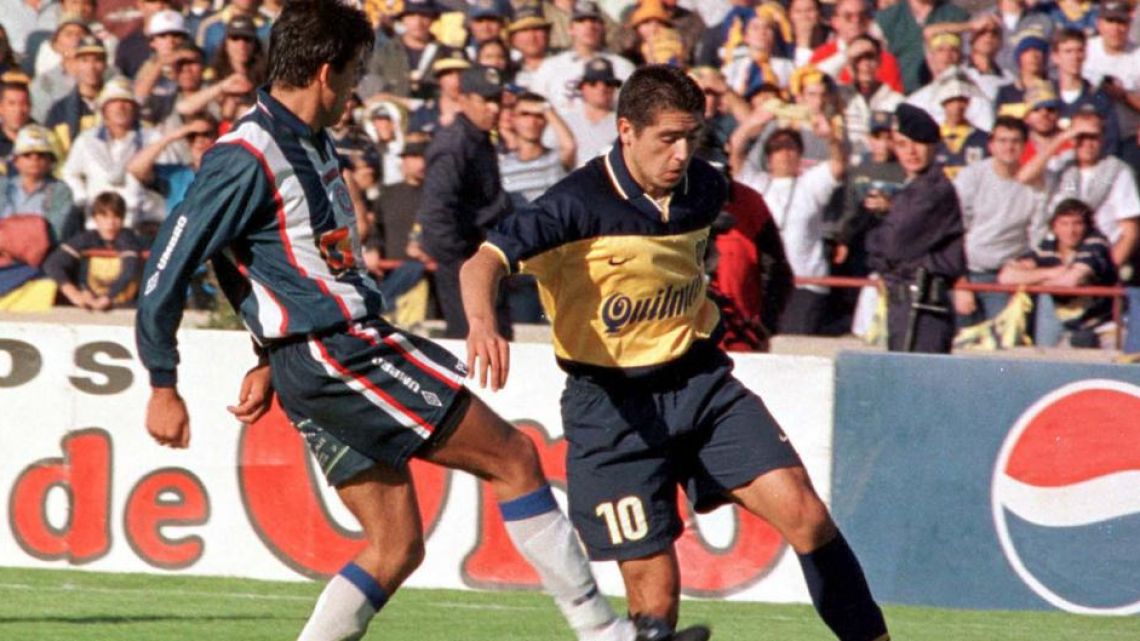

The blue and gold shirt with the number ’10’, the name Román and the signature of the current vice president of Boca Juniors is one of the most precious treasures kept by the Kempes Stadium Museum.
It was Juan Román Riquelme himself who gave it to Héctor Campana, the head of the Córdoba Sports Agency, in the run-up to the match that Xeneize played against Central Córdoba de Rosario, for the Argentine Cup, on March 2, 2022.
“To the friends of the museum, with love”, wrote the idol from Boca in the jacket that is exhibited in the old central hall of the Cordovan World Cup stage, and which also has his signature in handwriting. It was not the first nor the last time that, in his current role as manager, Riquelme visited one of the courts that saw him play the most times with the colors of the Ribera team.
At Kempes, Román played 11 games, the same number as at the Monumental de Núñez. Of the 71 stages in the country and abroad where the native of Don Torcuato wore the ‘blue and gold’, the podium was occupied by Malvinas Argentinas de Mendoza (12), José Amalfitani de Vélez (18) and La Bombonera, where he holds the record of 207 appearances and today he will have his farewell party.
Five visits to Belgrano, two duels with Talleres, a clash against Instituto and three friendlies (two summer superclassics against River Plate and a ‘forgotten’ confrontation with Nacional de Montevideo) includes the guestbook of ‘The Last 10’ in their days of soccer player.
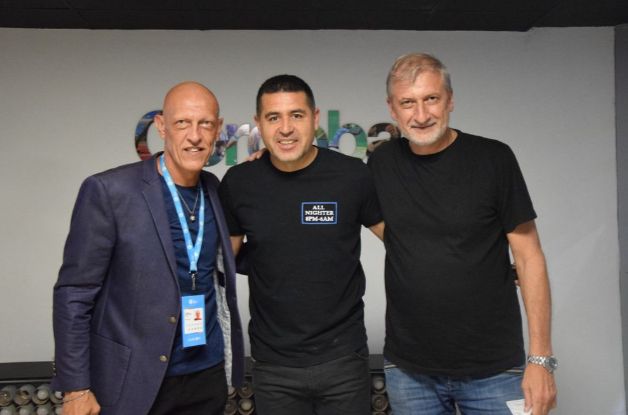 A NIGHT AT THE MUSEUM. Riquelme, with Oscar Dertycia and Héctor Campana, during a visit to the Kempes Stadium last year. /// PHOTO: CEDOC PROFILE
once chapters
Riquelme’s debut at the Chateau was on Sunday, September 13, 1998, when Boca faced the recently promoted Belgrano, for the 6th date of the Apertura. It was a 4-2 victory, with goals from Fernando Ortiz, Martín Palermo (2) and Guillermo Barros Schelotto for Xeneize, and Claudio Enría and Luis Fabián Artime for Pirata. Carlos Bianchi, the DT of the Buenos Aires team, replaced him with José Pereda two minutes from the end.
Three months later, on Thursday, December 10, Boca returned to Córdoba to face the Uruguayans of Nacional, in an anticipated celebration of his consecration as undefeated champion in the local tournament, after six years without titles. Surprisingly, the victory corresponded to the ‘charrúa’ team, which won 2-1. Román was replaced by José Basualdo at halftime.
El enganche also did a double in 1999. On Sunday, May 3, Boca and Talleres tied 0-0 for the 15th date of the Clausura, a contest that also crowned with the Olympic return. The return was on December 12, in the 5-1 defeat of Belgrano on the 18th date of the Opening. That Sunday afternoon, a great goal from ’10’ (a right foot shot from outside the area that propelled the ball into the upper right corner of the goal defended by Bernardo Martín Ragg, in front of the popular north) would put definitive figures on the scoreboard.
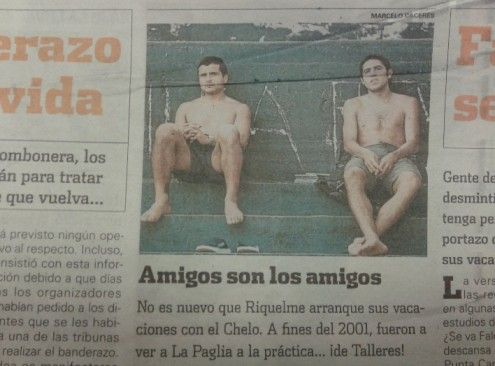 SURPRISE VISIT. The sports newspaper ‘Olé’ had the presence of Riquelme and ‘el Chelo’ Delgado in a Talleres training session in 2001. /// PHOTO: CEDOC PROFILE
In 2000, Román set foot on Cordoba soil to play against Instituto (2-2) on Sunday, April 16 (10th date of the Closing), and against Belgrano (3-1) on Saturday, September 9 (6th date of the Opening).
At the beginning of the following year, on Thursday, January 25, he scored a great ‘scissors’ goal for Darío Sala from Cordoba, in the 3-1 win against River for the Summer Cup, with his friend Pablo Aimar as a rival. In that game, which had the current DT of Talleres Javier Gandolfi on the substitute bench of the Núñez cast, the ’10’ from Boca left his place to Omar Pérez 21 minutes into the plugin.
The summer superclassic had its second round on Wednesday, January 30, 2002, in this case with a 0-1 defeat for Román and company. Between both Boca-River, the ‘bostero’ idol made another escalation in Córdoba on Sunday, October 21, 2001: I stumbled 0-1 against Talleres, for the 10th date of the Opening.
After a hiatus of a decade, Kempes received Riquelme again in two other official Boca commitments. Both against Belgrano and with Guillermo Farré, the Pirata’s coach, following him closely: a 1-1 draw on Sunday, April 22, 2012, for the 11th date of the Clausura; and a 2-1 victory on Wednesday, August 7, 2013 (with a penalty goal for Juan Carlos Olave), for the 2nd date of the Initial Tournament, in his farewell match for Córdoba.
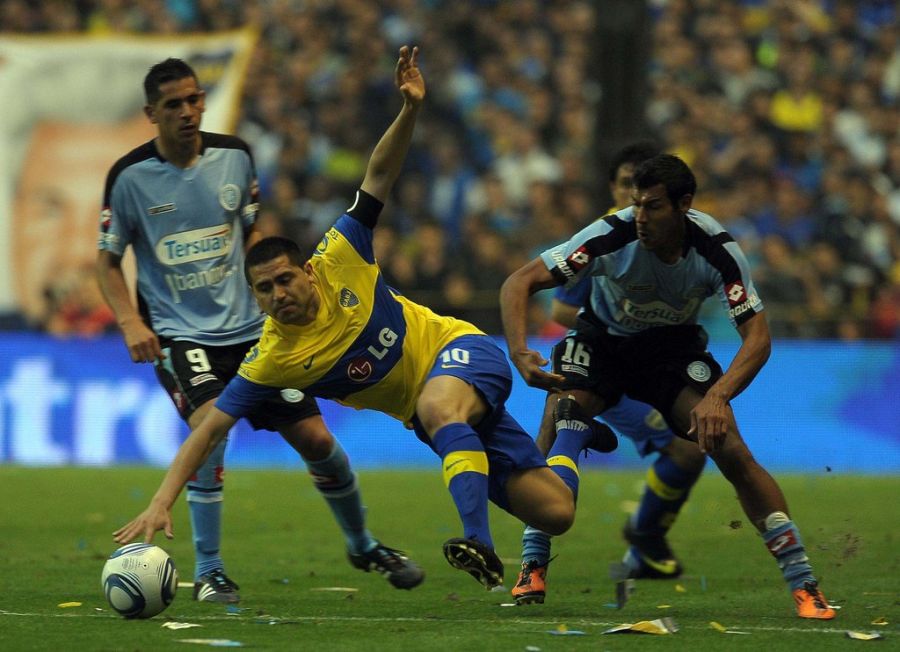 NO DEFEATS. Against Belgrano, the ’10’ played five times at Kempes and four at La Bombonera. The balance was five wins and four draws. /// PHOTO: CEDOC PROFILE
offside
Riquelme did not get to play in Córdoba with the shirt of the Argentine team. The time he was closest was in 2011, when Alejandro Sabella called him up for the ‘Superclásico de las Américas’ against Brazil, whose first leg was played at Kempes, but an injury sidelined him.
Also due to a physical ailment, Román missed the match that Argentinos Juniors played against Instituto in Alta Córdoba, on August 16, 2014. That match corresponded to the 2nd date of the Transition Tournament of the First B Nacional, the last one that played in his professional career.
He was present at La Boutique in the Jardín neighborhood at the end of 2001, where he was seen very relaxed in the stands with Marcelo Delgado, his Boca Juniors teammate. They both went to witness a training session for Talleres, which at that time had César La Paglia in its ranks, who shared with Román his stage of inferiors and youth teams.
Six years later, “El Chelo” Delgado landed in Belgrano and Armando Pérez, then manager of the Alberdi neighborhood club, took him out of the nexus to try to tempt Riquelme, who at that time had no place in the first team for Villarreal in Spain. . “We are thinking of economic engineering to face a high salary like the one a player of that category should have, although this would be a dream,” Pérez declared.
Finally, Riquelme managed a six-month loan with Boca, where he was key to obtaining the club’s sixth Copa Libertadores. Belgrano ended that semester with its third relegation in the First Division.


