
Apple’s decision to rely on Google’s Gemini artificial intelligence marks a pivotal shift in how the company plans to deliver advanced AI features to millions of users worldwide. Rather than waiting to perfect its own large-scale model, Apple is prioritizing speed, reliability, and user experience as it prepares a long-anticipated upgrade to Siri.
Apple confirmed that it will integrate Google’s Gemini AI model into the next generation of Siri, scheduled to arrive later this year. The announcement, made jointly by both companies, highlights a multi-year agreement that allows Apple to use Gemini alongside Google’s cloud infrastructure to support new artificial intelligence capabilities. For Apple, this partnership represents a strategic recalibration rather than a retreat: it signals a willingness to collaborate externally to meet growing expectations around AI-driven products.
A high-stakes alliance forged by pressing demands and broad scope
For years, Apple has emphasized building its own technology stack, favoring vertical integration over dependence on external providers. That philosophy, however, has been tested by the rapid evolution of generative AI. While competitors have released chatbots, productivity tools, and voice assistants powered by increasingly sophisticated models, Apple’s progress has appeared more cautious and incremental.
The updated version of Siri was first previewed at Apple’s Worldwide Developers Conference in 2024, where the company outlined a vision of a more conversational, context-aware assistant. The feature was later delayed, prompting speculation that Apple was struggling to match the pace set by rivals such as Google, Microsoft, and OpenAI. By selecting Gemini as a core engine for Siri, Apple aims to close that gap and deliver advanced functionality without further postponements.
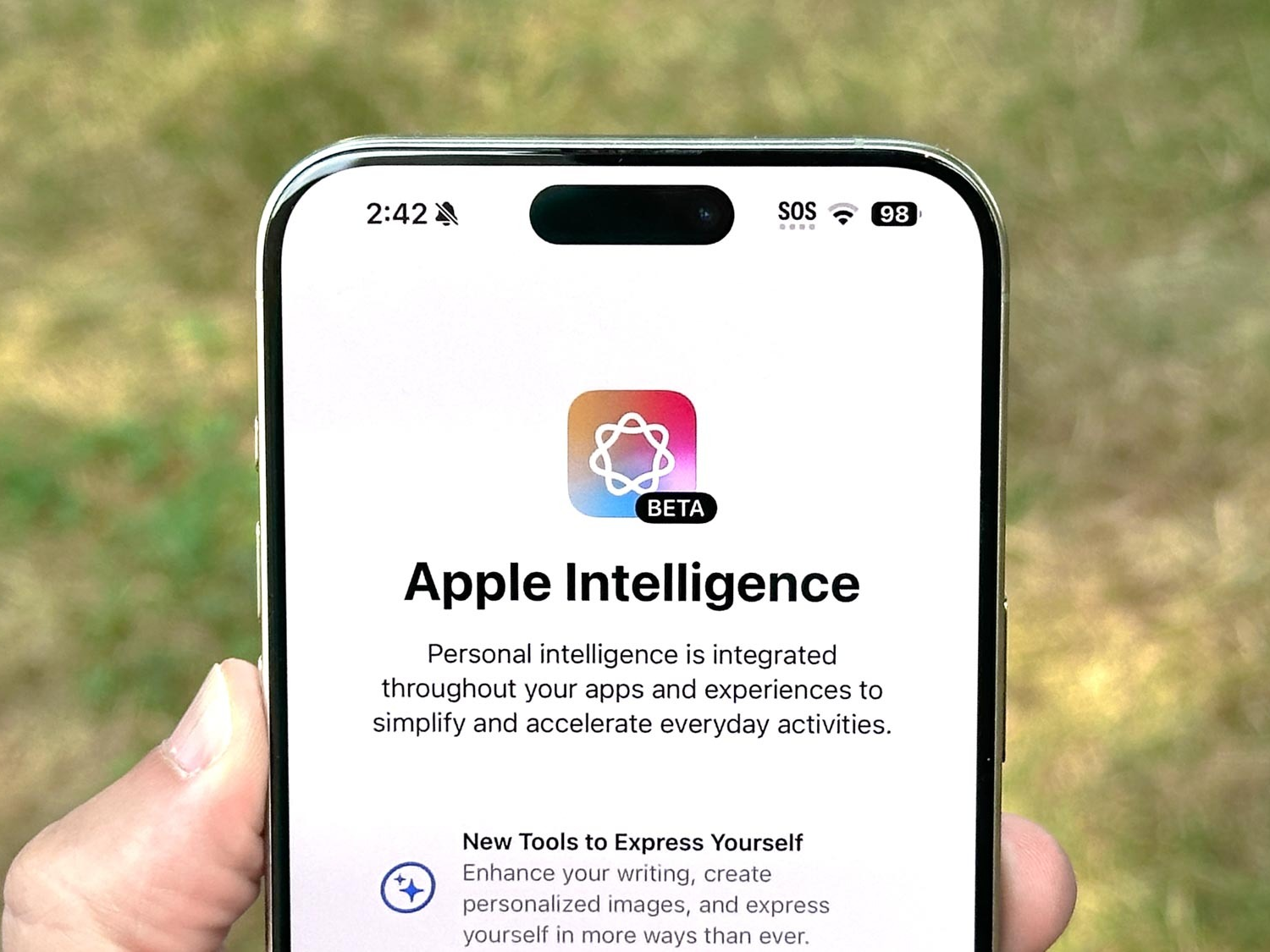
In a joint statement, the companies explained that Apple concluded Google’s AI technology provided the strongest base for Apple Foundation Models. The partnership aims to introduce fresh capabilities while upholding Apple’s enduring focus on privacy and security. According to the agreement, Apple Intelligence features will either run directly on users’ devices or within a protected cloud system, ensuring personal information stays secure.
What the deal reveals about Apple’s AI ambitions
The partnership has reignited debate over whether Apple has fallen behind in artificial intelligence development. Unlike competitors that openly market AI as a central pillar of their platforms, Apple has historically integrated new technologies quietly, prioritizing stability and usability over rapid experimentation.
Depending on Gemini does not inherently signal a lack of capability; instead, it reflects a practical choice. Crafting a state-of-the-art large language model demands immense computational power, extensive datasets, and prolonged development cycles. By utilizing Google’s established infrastructure and research, Apple can devote its efforts to polishing the user experience, embedding AI more naturally within its ecosystem, and guaranteeing that new functionalities remain consistent with its design principles.
Apple has broadened its AI collaborations as well. Beyond integrating Gemini, the company has acknowledged that certain capabilities will rely on OpenAI’s ChatGPT. Even so, the Gemini deal positions Google’s system as a core element of Apple’s AI strategy, prompting uncertainty about how these various technologies will operate side by side within iOS and other environments. Apple has yet to explain how tasks will be distributed among the models, though its strategy points to adaptability rather than exclusivity.
Investors have broadly embraced the decision, and many analysts interpret the deal as clear proof that Apple is committed to advancing its AI‑focused services and hardware. Instead of holding back until an in‑house system is fully refined, the company is opting to deliver noticeable enhancements right away, a move that could help revive interest in its devices.
Implications for Google in the AI arms race
For Google, the deal marks a pivotal endorsement of Gemini at a crucial point in the AI race, reflecting the company’s substantial efforts to establish Gemini as a flexible, enterprise-grade model suited for tasks ranging from enriched search features to advanced productivity solutions. By bringing Apple on board as a long-term collaborator, Google boosts Gemini’s prominence and extends its presence across hundreds of millions of devices.
The deal also underscores Google’s strategy of embedding its AI technology across multiple platforms, even those it does not directly control. While Apple and Google compete fiercely in areas such as mobile operating systems and digital services, the collaboration demonstrates how AI is reshaping traditional competitive boundaries in Silicon Valley.
Market reaction reflected this optimism. Shares of both Apple and Google rose modestly following the announcement, but the implications for Google were particularly notable. The stock movement briefly pushed Google’s market capitalization above $4 trillion in intraday trading, placing it among a small group of companies that have reached that milestone.
Siri’s evolution and the future of voice assistants
Siri was one of the first mainstream voice assistants when it debuted over a decade ago, but its capabilities have often lagged behind newer offerings. Users have criticized it for limited conversational ability and inconsistent performance, especially as generative AI has raised expectations for natural language interaction.
The integration of Gemini is anticipated to reshape the way Siri interprets and replies to user queries, moving beyond mostly scripted outputs and preset commands. The assistant will gain the ability to deliver more refined responses, sustain context throughout extended interactions, and support more intricate tasks. This shift mirrors wider movements across the industry, where voice assistants are evolving into entry points for AI-driven productivity rather than remaining basic command-based tools.
Apple is wagering that a more intelligent Siri will strengthen the appeal of its ecosystem, motivating users to upgrade their devices and stay within its platform, and after several difficult years for iPhone sales marked by market saturation and economic volatility, AI capabilities are now seen as a crucial way to stand out.
Market confidence and financial outlook
The timing of the announcement is significant as Apple approaches its next earnings report. Analysts expect the company to post year-over-year iPhone sales growth of around 11% for the December quarter, with total profits projected to rise nearly 8% to more than $39 billion. While these figures reflect a recovery, sustained growth will likely depend on Apple’s ability to introduce compelling new features that justify upgrades.
AI-powered services, including an enhanced Siri, are central to that strategy. Investors see the Gemini partnership as reducing execution risk by ensuring that Apple’s AI offerings are competitive from day one. As one analyst noted, the deal addresses long-standing questions about Apple’s AI direction and provides clarity on how the company plans to move forward.
Although the financial specifics were not revealed, earlier reports indicated that Apple might spend around $1 billion each year to access Gemini, a cost that would remain feasible for a company of Apple’s scale if the integration boosts device sales and enhances customer loyalty.
User trust, personal autonomy, and safeguarding privacy
One of the most delicate elements of integrating AI is safeguarding data privacy, a cornerstone of Apple’s brand identity. The company noted that Apple Intelligence features powered by Gemini will comply with its rigorous privacy principles, with processing handled either directly on the device or through a secure cloud infrastructure engineered to limit data exposure.
This approach differentiates Apple from competitors that rely more heavily on centralized cloud processing. By maintaining control over how AI interacts with personal data, Apple aims to reassure users that advanced functionality does not come at the expense of privacy.
Balancing openness with ease of use will be a key challenge. With several AI models working in the background, users may seek a clearer understanding of how their data is managed and which technologies take part. How well Apple conveys this information could shape how the public views the partnership.
A broader shift in the technology landscape
The Apple–Google agreement illustrates a wider evolution across the tech sector, where collaborative efforts increasingly stand alongside rivalry. As AI systems become more intricate and demanding in terms of resources, even major corporations are acknowledging the advantages of pooling infrastructure and specialized knowledge.
For Apple, collaborating with Google does not erode its identity as a company centered on refined consumer products; rather, it highlights a pragmatic style of innovation that favors delivering impeccably crafted experiences instead of controlling every foundational element. For Google, this agreement broadens Gemini’s reach and strengthens its standing as a premier AI provider.
As the refreshed Siri becomes available later this year, its capabilities will effectively put this approach to the test in real-world conditions, and strong results may reshape how people perceive voice assistants while illustrating how targeted alliances can speed innovation; yet if it falls short, it will likely intensify doubts about Apple’s capacity to remain competitive in an AI‑focused landscape.
What is clear is that the stakes are high. Artificial intelligence is rapidly becoming a defining feature of consumer technology, shaping how people interact with devices, access information, and manage daily tasks. By placing Gemini at the heart of Siri’s evolution, Apple is making a decisive move to remain relevant in that future, signaling that collaboration, not isolation, may be the most effective path forward.