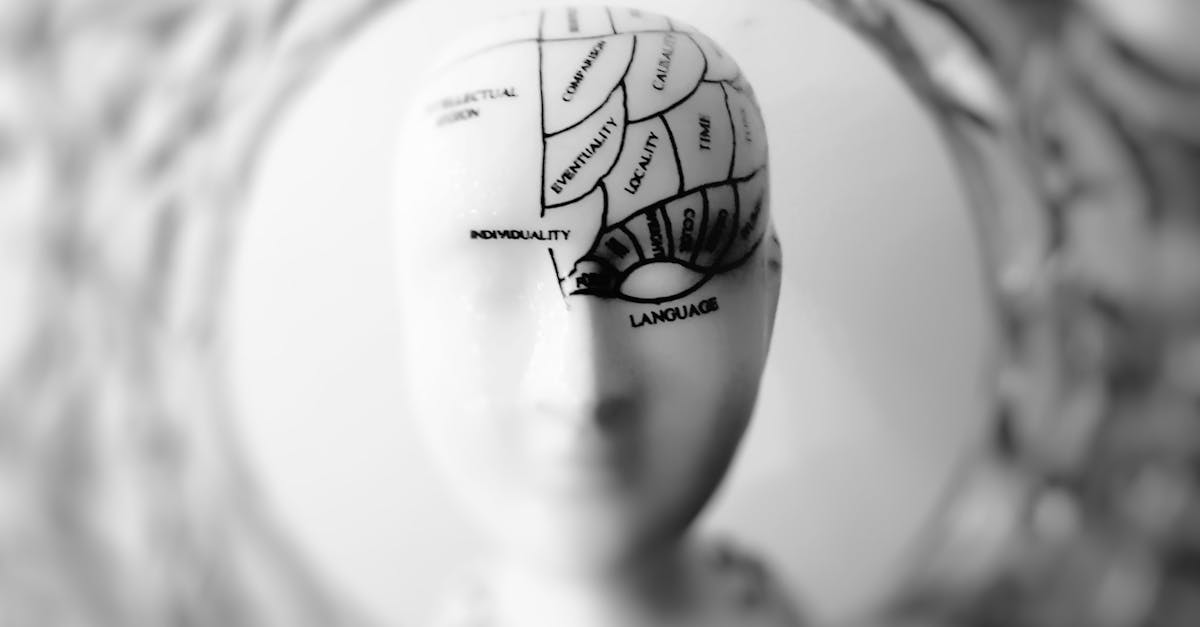


Today there is a widespread idea that the future is something that must be incorporated quickly and urgently. Suddenly, teachers find themselves immersed in a whole new universe, full of knowledge and skills that they must teach their students so that they can respond and adapt to a world that is constantly changing and threatens to expel those who does not fit How to achieve this goal that, at first glance, seems to be unattainable? How can we collaborate to make this process as profitable as possible?
It is important to mention the repercussions and the global impact that the COVID-19 Pandemic had, not only in relation to work, but also in education. According to current ILO (International Labor Organization) projections, hours worked worldwide in 2021 will have decreased by 4.3%, the equivalent of 125 million full-time jobs (compared to data from before the pandemic). . Young people, particularly women, continue to face a larger employment gap, while middle-income countries continue to show no progress.
There are still pending challenges in the most disadvantaged regions. Internet access continues to be an unresolved issue and without taking into account what a quality connection means to be able to navigate, produce content or train.
In this sense, today in terms of education we identify the following challenges:
- Collaborate with educational policies in their efforts towards equal opportunities for all.
- Renew educational approaches by recognizing recent changes and, especially, the interests and questions of students.
- Prepare students in both technological and soft skills that are required in a complex world.
Teaching digital skills and new technologies are not going to teleport us into the future like through a tube, it is not a spontaneous and effortless process. But, today, we can say that digital skills and technologies are two fundamental pieces so that, together, we can begin to build a more inclusive future where more and more people can demonstrate the infinite possibilities offered by the digital economy.
According to the concept of technology intensity, in the next few years, every company will be a technology company. Without going any further, the worldwide demand for the IT industry is 206% and, according to data from CESSI (Argentine Software Industry Chamber), in Argentina, per year, there are 15,000 technical positions without coverage in companies from all industries.
Also, according to the study Female students in the ETP: indicators on the participation of women in technical education at the secondary level. 2021[1], of the total number of students starting secondary school, only 14% of women choose the Technique, compared to 25% of men. And within technical high schools, the percentage of female participation is only 34%.
In addition to showing us a social need, these numbers tell us that the world of technology has a GREAT opportunity. For this reason, we also have the GREAT challenge of working to democratize the technology and knowledge necessary so that more people can get on this train: because we want the future we build to be as equitable as possible.
On the other hand, digital technologies in education bring us new languages and formats that allow generating significant learning experiences and building knowledge in line with social transformations and the interests of students. This is directly related to our mission: to empower every person and organization on the planet to achieve more.
How can new technologies be incorporated in the classroom to stimulate the critical and creative of the students so that, in addition to being consumers of technology, they can build them and create their own solutions to respond to the new needs of today and tomorrow? tomorrow?
On the other hand, to understand digital learning, it is important to start with the purpose. Addressing complexity: It’s not about teaching separate skills, you need to play the whole game, in the words of mathematician and educator David Perkins. For this reason, we are now talking about problem-based or project-based learning, two innovative teaching methods that start from complex problems in the real world to teach digital or soft skills.
To bring digital technologies and skills closer to more girls and women and, at the same time, stimulate creative thinking to solve increasingly complex problems, Microsoft worked in synergy with the public and private sectors and non-governmental organizations. Each one, from their role, contributes their perspective to address today’s educational challenges.
With this horizon, we developed Tic Tac, time to innovate, together with the Ministry of Education of the Nation -through INET-, the YPF Foundation and ARSAT. It is a contest that rewards innovative projects that seek to solve problems related to energy, mobility, waste and connectivity from a STEAM approach.
This year, the contest called for students between the ages of 12 and 18 from public and/or private technical secondary schools who were accompanied by a teacher. In line with the Project-Based Learning method mentioned above, the students were grouped into teams and the contest consisted of different stages that included the delivery of a technological kit by the National Institute of Technological Education (INET) for the implementation of the project. Likewise, in the award stage, 3 projects will be selected per cycle -6 in total- which were evaluated by a jury made up of specialists from the organizing institutions.
Also this year we signed an agreement with the Ministry of Economy and Energy of Mendoza to promote the learning and development of technical and digital skills in young people in the province with the aim of promoting innovation, generating greater employability opportunities and developing new talents in the region.
This is just one example of how digital technologies can be included in education and how the teaching of digital skills allows us to build the future we want: more inclusive and sustainable.
By Mariano Yacovino, Director of Education at Microsoft Argentina
You may also like