

World Cup and Copa América matches. Goals by Diego Armando Maradona (the first with the Albiceleste) and Lionel Messi in the Argentine National Team (number 50 in the Major), promotions by Talleres, Belgrano and Instituto and Olympic tours by River and Boca. Luxury international football presences, such as Franz Beckenbauer and Ronaldinho. From memorable recitals such as those by Paul McCartney, Roxette, Soda Stereo and Joan Manuel Serrat to Los Pumas matches and the organization of a World Rally super prime. This is a quick review of some of the many unforgettable events at the Córdoba stadium, which
It was inaugurated 45 years ago and after the renovations in 2011 it was baptized as the Mario Alberto Kempes stadium. An icon of the province of Córdoba and the country.
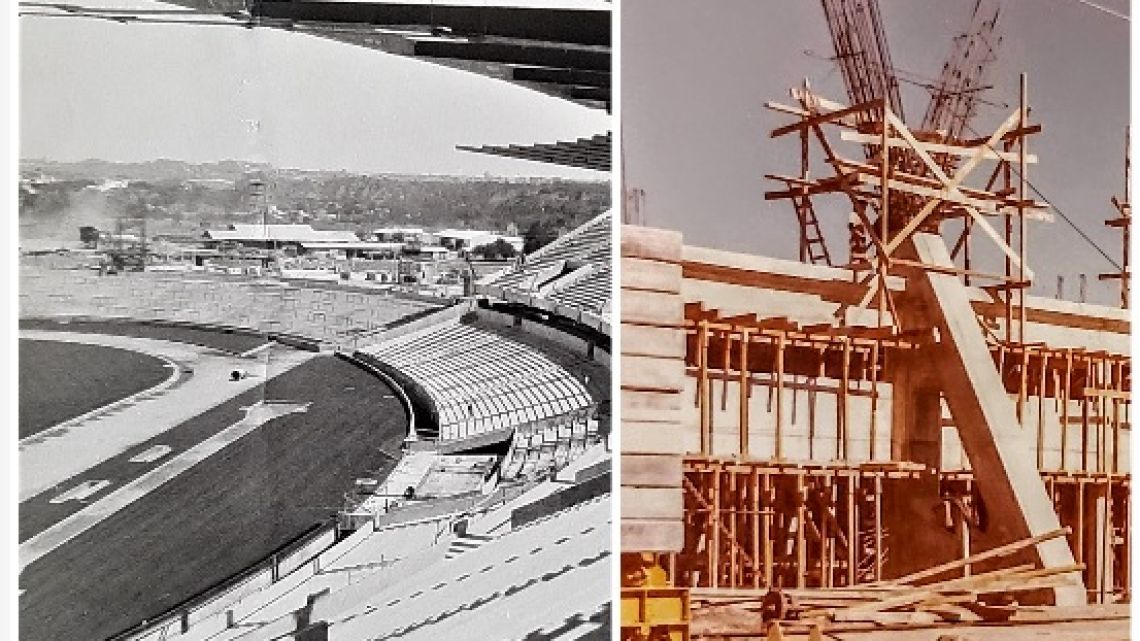
* Construction. On March 7, 1975, the cornerstone of the sports arena was laid. The construction of the Ciudad de Córdoba Sports Center Stadium, a name that was never imposed, since most mentioned it as the ‘Chateau Carreras’, was carried out by the company Benito Roggio e Hijos SA and designed by the architecture studio Sánchez Elía Peralta Ramos associated with the architects Hugo Oviedo and Alberto Ponce. This coliseum located in the charming western neighborhood of Cordoba was built especially for the 1978 World Cup. The work consisted of four grandstands, one of them covered, and with capacity for just over 47,000 people.
The execution took almost two and a half years (961 days in total) and amazed everyone because of its design, similar to the other two stadiums that were built for the World Cup: those in Mar del Plata and Mendoza.

* 45 years ago. The largest coliseum in Córdoba was inaugurated on Tuesday, May 16, 1978, with a friendly match between the Argentine National Team and a representative team from the Cordoba League. The result favored the Albiceleste cast 3-1, which two months later became world champion. The first goal was converted by Mario Alberto Kempes time for those led by César Luis Menotti. Three minutes later Fernando Moreschini equalized and René Housseman and Leopoldo Luque sealed the result.
The Córdoba team formed with Rubén Guibaudo (replaced by Fernando Luraschi); Eduardo Anelli (Juan Pereyra), Omar Beccérica, Rubén Coletti and Juan Carlos Bujedo; Luis Ludueña, Eduardo Giuliano and Daniel Willington (José Omar Reinaldi); Jorge Coch, Rito Fernández and Horacio Baldessari (Moreschini). While the national team lined up Ubaldo Fillol; Jorge Olguín, Luis Galván, Daniel Passarella and Alberto Tarantini: Osvaldo Ardiles, Américo Gallego, José Daniel Valencia (Oscar Ortiz); Ricardo Bertoni (Houseman), Luque and Kempes.
* World Premiere. The first official match at the stadium was in the framework of the Argentina 78 World Cup: on June 3, the Peruvian National Team defeated Scotland 3-1, in front of 38,000 spectators.
* Renewal. In 2010, the government of the Province of Córdoba began remodeling works on the stadium with profound changes and on October 21 of that year the change of name to ‘Mario Alberto Kempes Stadium’ was approved, in homage to the former soccer player born in Bell Ville. , who was the scorer and best player in Argentina 78. The new works on the stadium were carried out for the 2011 Copa América and were inaugurated on June 26 of that year, expanding its capacity to 57,000 seated spectators. A new stall was built on the ‘open stall’ and it was roofed over; the popular ones were made completely new and covered; The lighting system was changed and it became one of the largest and most attractive stadiums in South America.

- CELEBRATION
- As part of the celebration for the 45th anniversary, on Tuesday from 4:30 p.m. there will be a thematic guided tour called ‘Construction of the Córdoba Stadium and opening match’. The event is free and has limited seats, with prior registration. In it, details of the construction will be highlighted and, in addition, it will serve to commemorate the opening match. It will be the opening of a series of thematic visits that will take place throughout the year, which will address different aspects of the Kempes stadium.

You may also like


