

Those who know me know about my admiration for Saint Francis of Assisi. On every occasion that warrants it, I express it and highlight it. The son of a wealthy family in this small town in the Province of Perugia, Francis found himself stripping himself of his father’s possessions and giving himself fully to God: he embraced poverty and lived an evangelical life, preaching God’s love to everyone. His simplicity, his humility, his faith and his love for Christ enabled him to live life joyfully and as an ongoing celebration of the magnificence of creation. It was for this reason that Pope Gregory IX canonized him and, from there, ensure that his legacy transcended his time, to become a timeless model and a figure valued worldwide, a symbol of Christian spirituality.
I believe that no one can deny or argue that today, almost 800 years after his death, his legacy is still valid and his philosophy of life continues to be an example for many. It is not a fact or a minor detail that our current Supreme Pontiff has chosen that same name to be represented: he went for the same humility, the same austere life and deep devotion to the poor. Like Saint Francis of Assisi.
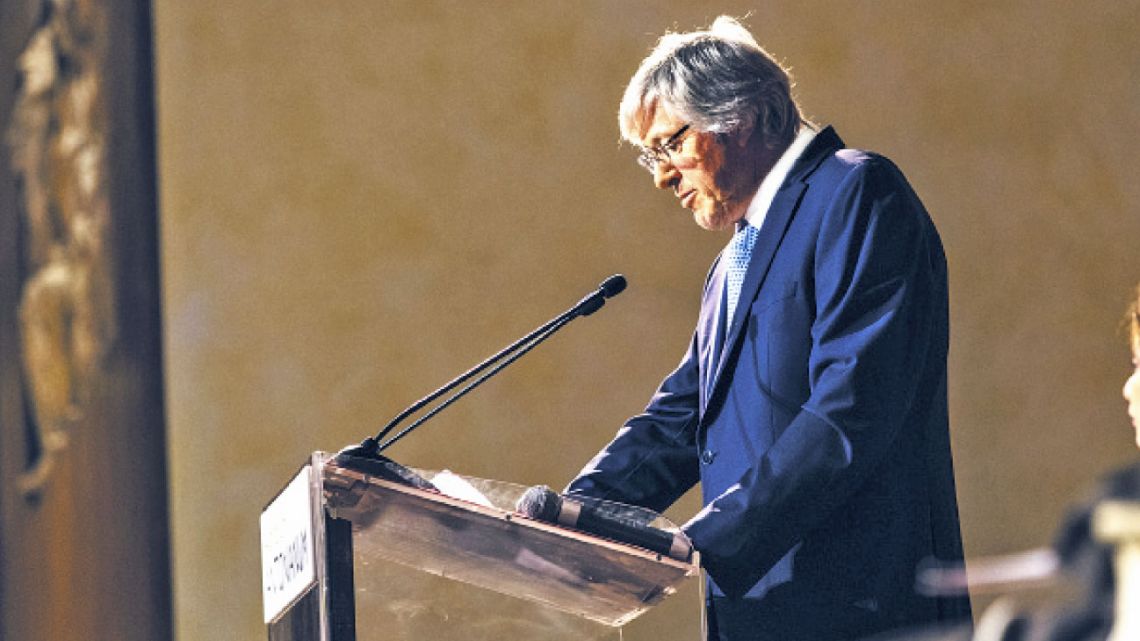
A few weeks ago I had to experience two very emotional moments. On the one hand, the Pontificia Universitá Antónianum in Rome recognized me with the San Francesco Prize, an award that has previously been given to authors who promote scientific studies on law, philosophy, Mariology, Sacred Scripture and theology, as well as evangelical values. . It was the first time that the institution recognized a person by their modus operandi. That an entity with more than a hundred years of history, promoted by the Order of Friars Minor, has highlighted the Franciscan spirit in my way of life, is for me a commitment and an incentive to continue working and deepen this path. Daily and in each of my acts I try to express love, which can only be taught by example.
A few days after that recognition, and it is worth highlighting the place, we promoted a symbolic embrace in Assisi for universal brotherhood, with the simple objective of promoting peace and love among all the inhabitants of the planet. It seemed necessary to start this proposal that will continue in different cities of the world, that this first meeting will take place there, neither more nor less, in the place where he received his Christian vocation and where Saint Francis died: the Porziuncula of the Sanctuary of Santa María. of the Angels. It is difficult to put into words the feelings that arise when seeing dozens of young people committed to the same cause, unknown young people, of all ethnic groups, in search of a world without wars, where peace and love reign among people.
So many years of history, of evolution, of technological advances and in telecommunications… So many years of preaching peace and it still continues to have wars in the world. Those responsible do not take into account the consequences that this brings to our planet: hunger and poverty are damaging the entire world. This has to hurt us. We are all part of a unit and the more in contact we are with our inner being, the more we perceive that we are all part of a whole. Consequently, the more damage we do, the worse we do to ourselves.
Saint Francis of Assisi is also recognized for being the patron saint of ecology. He taught us that we must take care of our common home: planet Earth. But that care not only involves nature, but primarily the human being, man. And that is achieved through peace. We must make the commitment to build a better world, not only for those who inhabit it today, but for future generations. We think of them. A world without wars is possible.
* Writer and philanthropist.
You may also like


