
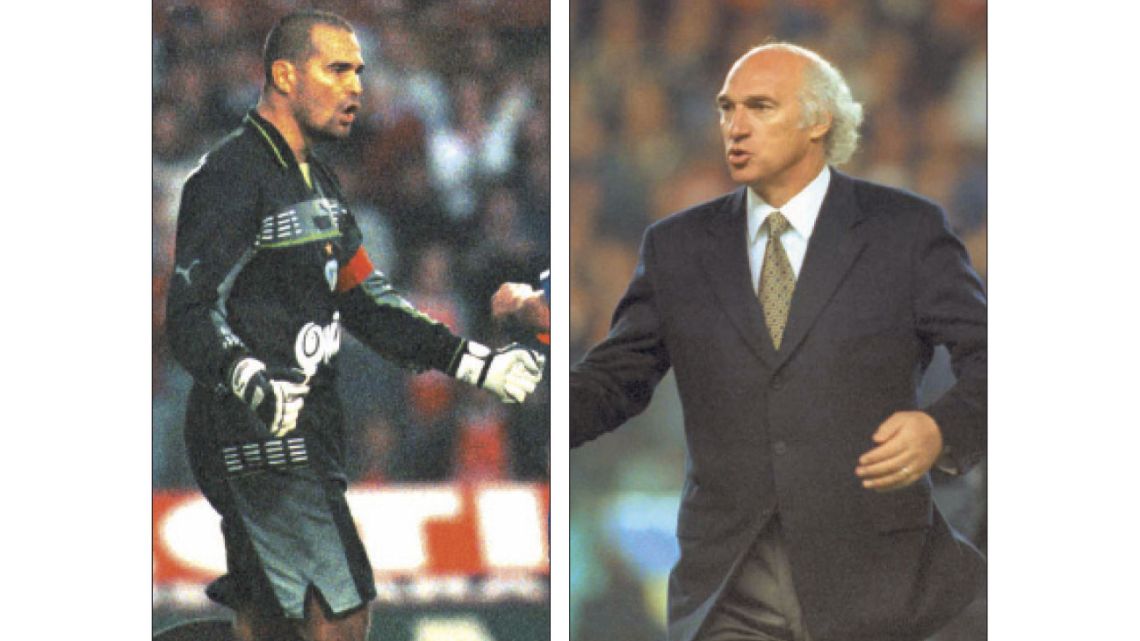

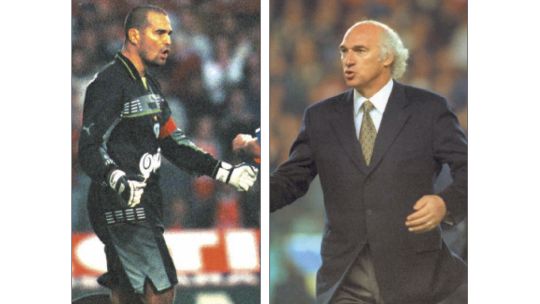
Last Monday night I went to see Vélez-River, which turned out to be one of the best games in recent times. I am not a fan of either of the two teams, so I was able to enjoy the game dispassionately, with the good view that Amalfitani has (I was in the South High stalls, quite high up and every detail of the match was perfect). At halftime, the loudspeakers announced that Carlos Bianchi and José Luis Chilavert were in the official box. There was applause, but no standing ovation, as I expected. Perhaps it is due, according to what they told me, to the fact that it is quite common for them to go to the field (a little less Bianchi) and their presence does not attract attention. I don’t know.
As I said, I am not a fan of Vélez, those sympathizers are trapped in a certain tension with the players and in an open bad vibe with the leadership. Perhaps that had an influence – being interested in other things – in that the applause, although enthusiastic, was not so intense. But not for me, who applauded wildly. Chilavert is the best goalkeeper I’ve seen in Argentine soccer. He had everything, starting with how he tackled when he was physically fit. At times it seemed impossible to score a goal. Then, because of the goals that he himself scored, very rare at that time and in this one as well. The goal against River from before halfway is one of the greatest football geniuses in history (a mixture of intelligence, decision and talent). But, above all, Chilavert did something else unique, something that seems impossible for anyone else: he turned soccer—the team sport par excellence—into a one-on-one duel, like those in Hollywood westerns, in which everyone town retires to see how two guys face each other. The entire town summed up in a duel between two, only two. Others as spectators. What did Chilavert do? In the days before important matches, he began to speak to the rival goalkeeper (his favorites of him were Burgos and Navarro Montoya, whom they had as children). He spoke to them and to no one but them. As if only two of the 22 players were left: him and the rival goalkeeper. They spoke to them –through the press– and threatened them with scoring a goal. Or, rather, he warned them what was going to happen. Because that happened: he scored a goal! Soccer became a miniature of two, to see who draws first (which was always him).
And about Bianchi, what to say? The fact that Julio Grondona has denied him the possibility of being the technical director of the Argentine National Team – a minor position, as Magnetto would say – makes him even greater. Among all his virtues, which obviously are many, he rescues his perseverance for having intelligent players.
Of course, he cared about the technical and physical quality of the footballers, and other aspects. But, above all, he believed in the idea that soccer is a matter of intelligent players (which is not the same as “alive”: the so-called “Creole liveliness” is not very interesting to me). Now without space, one of these days I will return to the question, so: what is it to be an intelligent player?
You may also like


