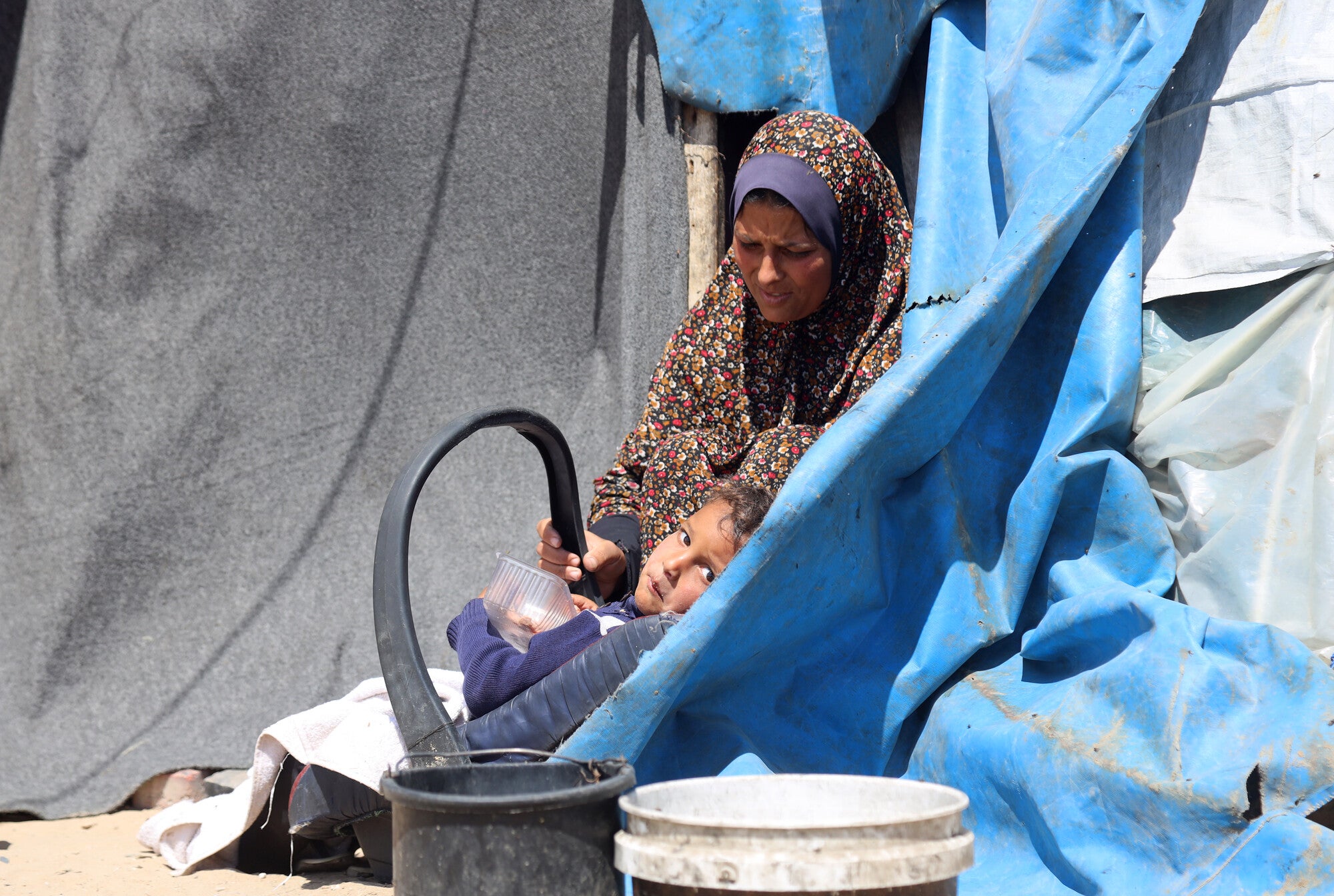

In a region where everyday routines have been upended by conflict, the simple act of searching for food has become a life-threatening mission. For one Palestinian mother, stepping outside her home to secure basic supplies means facing the risk of never returning—an uncertainty her children understand all too well.
The family, like countless others in Gaza, has seen their world transformed by ongoing violence. Access to food, water, and medical care has been severely disrupted, forcing families to make impossible choices. In neighborhoods where markets once bustled with activity, shelves now stand empty, and the journey to find nourishment has become a calculated risk.
Each time their mother prepares to leave, her children cling to her with desperate pleas. “We don’t want you to die,” they whisper, their voices trembling with fear. It’s a heartbreaking reflection of life in a place where danger is omnipresent and survival often hinges on hope and chance.
The mother, whose identity is being withheld for safety reasons, describes the dilemma in quiet, measured tones. She knows staying home could mean watching her children go hungry, but stepping out could mean never seeing them again. “I try to be strong for them,” she says, “but inside, I’m terrified.”
Many families in Gaza share similar stories. With supply lines blocked or destroyed, and with infrastructure severely damaged, people have turned to makeshift solutions. Residents barter for goods, forage for wild plants, or rely on the rare assistance deliveries that manage to enter the area. But these efforts fall short of meeting the needs of a population grappling with daily uncertainty.
According to humanitarian groups working in the area, the scenario is alarming. Availability of food is decreasing, costs are escalating, and nutritional shortcomings are on the rise—particularly among the young and the old. Global relief organizations have urged for secure routes to enable crucial supplies to reach the people, but the way ahead is entangled with political and logistical challenges.
For parents such as this, the emotional burden is equally as intense as the physical challenges. She recounts evenings when her kids weep themselves to sleep—not just due to hunger but also from terror. The loud sounds from nearby blasts, the lack of electricity, and the awareness that hospitals might not be accessible in a crisis all amplify their worries.
“This is not the kind of life that should be for children,” she mentions, her voice trembling. “They are entitled to tranquility. They are entitled to a future.”
Her remarks resonate with numerous parents in regions affected by conflict globally, where battles occur not only in combat zones but also in homes, schools, and during silent times of parental concern. The unseen toll of warfare—its psychological and emotional impact on families—frequently persists even after the sounds of war have ceased.
In response to the growing crisis, some local communities have established informal networks of support. Neighbors watch over each other’s children while parents venture out in search of supplies. Volunteers share what little they have. But these acts of solidarity, while powerful, are no substitute for comprehensive relief.
Experts caution that if the present circumstances continue, the potential for a humanitarian disaster could increase. Hunger, disease, and forced migration are already prevalent, and lasting psychological damage is affecting a generation of youth who understand more about anxiety than liberty.
Still, there are moments of resilience. The mother smiles faintly as she recounts how her children try to comfort her, offering hugs and hopeful reassurances. “They tell me I’m brave,” she says. “But they are the brave ones. They keep going. They still laugh, still dream.”
Her tale is not uncommon, yet it serves as a poignant reminder of the human element behind the headlines. As governments and organizations discuss policies and ceasefires, everyday individuals continue—battling not with arms, but with bravery, perseverance, and affection for their kin.
Every day, this mother makes a choice no parent should have to make. And every day, her children wait, watching the door, hoping she will return safely with bread, with milk, with a sign that life, in all its fragility, will go on.
Their plea—simple, heartfelt, and tragically necessary—captures the soul of a conflict that has gone on too long: We don’t want you to die. It’s a cry for protection, for dignity, and above all, for peace.