


After the consecration in the Qatar World Cup 2022the players of the Argentine national team They have not stopped receiving different tributes and recognitions. On this occasion, the goalkeeper of the step, emiliano martinezreceived a special tribute from a group of paleontologists what did i decide put his name to a prehistoric species discovered in Mendoza.
It is a new fossil species of escuerzo that was baptized “Lepidobatrachus dibumartinez” by Argentine scientists Guillermo Fidel Turazzini and Raul Orencio Gomezmembers of the Laboratory of Evolutionary Morphology and Paleobiology of Vertebrates of the Faculty of Exact and Natural Sciences of the University of Buenos Aires (UBA).
“On December 20, 2022, in the middle of the World Cup celebration, we sent our manuscript, and on May 30, 2023 our most recent work was finally published in the Journal of Vertebrate Paleontology, a new fossil species of escuerzo“, the experts pointed out when announcing the novelty.
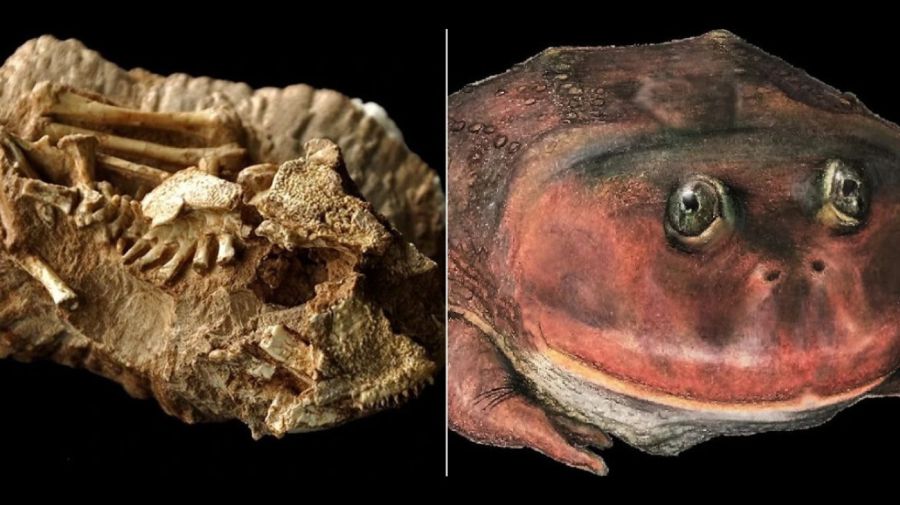
On their social networks, Turazzini and Gómez explained that deciding to pay “a heartfelt tribute to the Soccer Team, but especially to the great goalkeeper who defended the Argentine fence time and time again” and stressed that theI drawing they made them “scream, laugh, and cry with each of their explosions.”
“Thank you, Dibu Martínez, for the joy that you have given us to all the Argentine people”say the paleontologists, who highlight the “continuous support” of the UBA and CONICET, as well as detailing that they will have the support of a scholarship from the National Fund for Scientific and Technological Research.
The fossil remains of Lepidobatrachus dibumartinez were found in the area of Huayquerías del Este, 100 kilometers south of the city of Mendoza. The scientists indicated that this prehistoric strain suffered in the Early Pliocene, that is, approximately 5 million years ago.
Source: NA