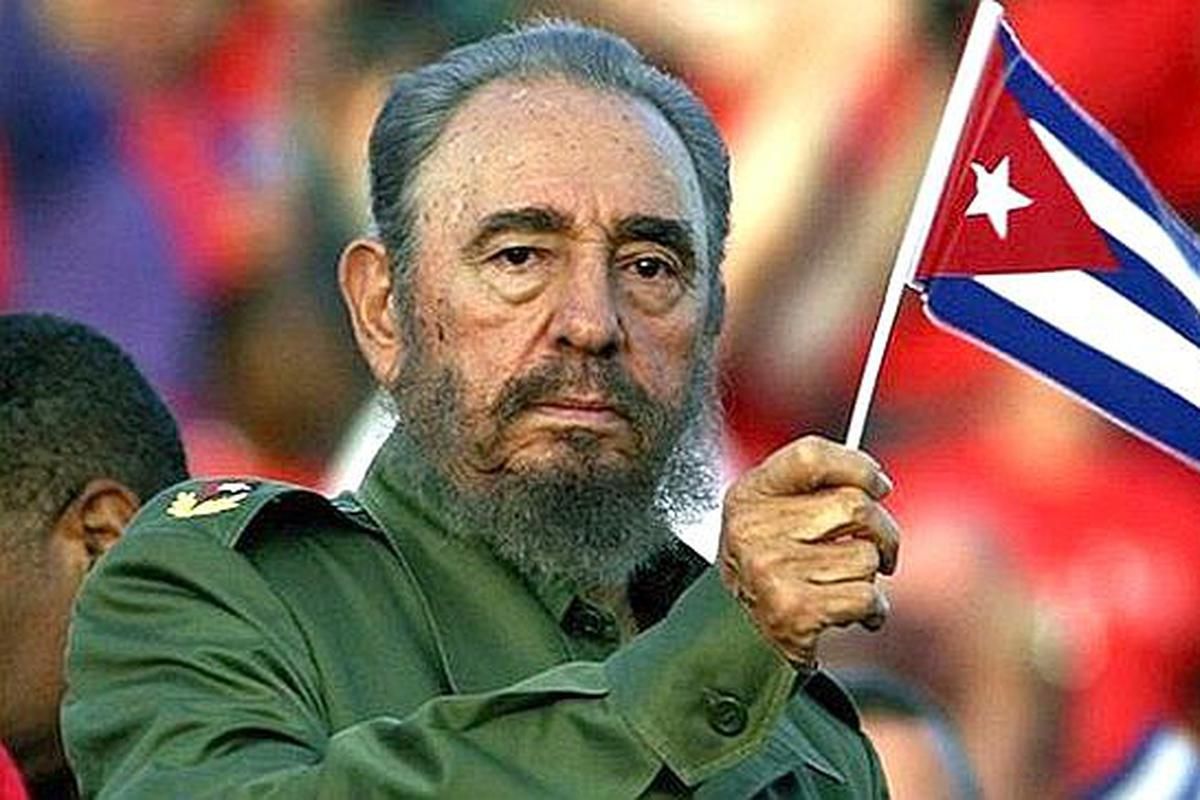
He announced it through a letter published in the electronic edition of the official newspaper Granma.
There he spoke, for the first time, of his “precarious state of health” that forced him to delegate provisional power to his brother Raúl Castro years before and to reject for the first time the position of President of the Council of State and Commander-in-Chief of Cuba.
Fidel Castro had been intervened on several occasions due to repeated intestinal ailments.
In the letter he stated: “I betray my conscience to occupy a responsibility that requires mobility and total dedication that I am not in a physical condition to offer.”
The news traveled the world in a few minutes, while the first conjectures began to be woven about what would happen to the government of the island after the departure of its maximum leader and one of the key figures of the cold war.
One of the first to speak out was US President George W. Bush during a visit to Rwanda.
Meanwhile, the number two in the State Department, John Negroponte, was less optimistic, considering it difficult for Cuba’s political situation to change radically, at least in the short and medium term.
The then senator from Illinois, Barack Obama, opined that US policy with respect to Cuba began with the changes that took place on the island and advocated for a democratic change on the island.
Years later and as president, Obama promoted a historic rapprochement with Cuba that was later suspended by Donald Trump.
The truth is that both the United States and the anti-Castro Cubans residing in Miami took the news with little optimism.
Fidel Castro, 81 years old at the time, held the post of president of Cuba since December 3, 1976.
Previously, he had held the position of prime minister since February 16, 1959, after the triumph of the Cuban revolution against the Fulgencio Batista regime on January 1 of that same year.
That February 24, 2008, Castro also revealed his interest in preparing Cubans “psychologically and politically” in the face of his absence and assured that he would concentrate his forces on becoming a “soldier of ideas” through the publication of his reflections.
He did so until his death on November 25, 2016. He was 90 years old.
On February 24, 2008, Fidel Castro resigned from the presidency of Cuba after 32 years in power.
The story is also news. RadioProfile. Script by Javier Pasaragua and voice over by Pita Fortín.
The tourism real estate market continues to generate interest among those seeking assets capable of…
Synthetic biology initially rose to prominence through its role in pharmaceuticals, where modified microbes were…
Artificial intelligence is rapidly moving from experimental deployments to mission-critical systems across regulated industries such…
Fintech and digital banking have shifted from fast-paced experimentation toward a steadier stage characterized by…
Tom Ford’s influence on the fashion world stands as genuinely transformative, with his body of…
Reputational risk describes the possible decline in a company’s value that arises when stakeholders’ views…