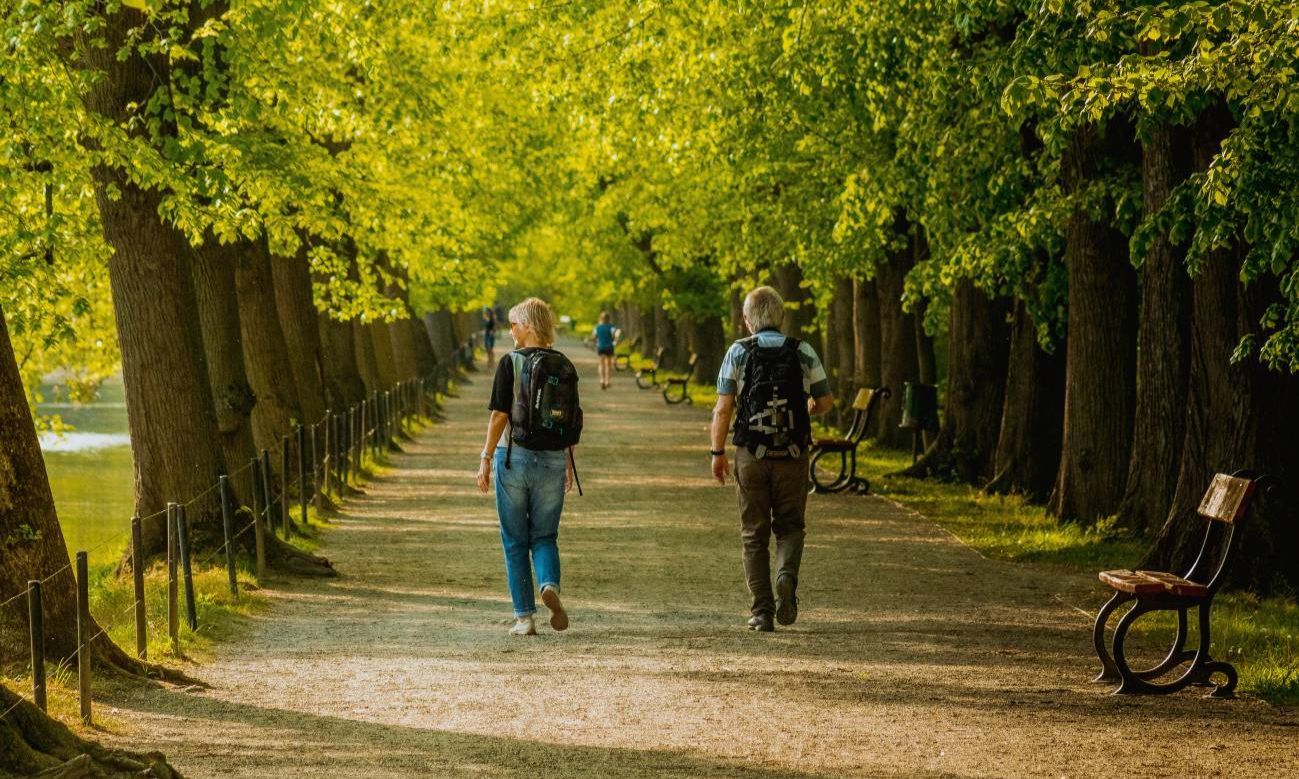
A study published in Science Advances conducted by specialists from the Northwestern University Feinberg School of Medicine, which constitutes that green spaces help delay aging. According to the report by the American institution, people who have access to green spaces are on average 2.5 years biologically younger than those that do not have it.
“Living near green spaces can help to be younger than what the real age indicates,” he said. Kyeezu Kim, one of the study’s authors and a postdoctoral fellow at Northwestern University. She and she added: “We believe our findings have significant implications for urban planning in terms of expanding green infrastructure to promote public health and reduce health disparities.”
In this regard, it is estimated that more than half of the the world population now lives in urban areas and it is projected that around 68% will do so by 2050. Green spaces in these areas, including parks, green roofs and community gardens, provide critical ecosystem services and their potential benefits for healthy aging have been studied for years.
For all the proven benefits of living near green spaces, it’s unclear whether parks actually slowed aging at the cellular level. To investigate this hypothesis, the team of scientists discovered chemical modifications to DNA known as methylation. For this verification, previous works were observed that have shown that the so-called epigenetic clocks based on DNA methylation They can be a good predictor of health conditions against various diseases and a more accurate way of measuring age.
For the research, Kim and his colleagues helped more than 900 people from four American cities. over a 20-year period, from 1986 to 2006. Using satellite imagery, the team assessed how close the participants’ residential addresses were to stimulating natural spaces and parks, and compared this data to blood samples taken in the study’s 15s and 20s, to determine their biological age.
The team built statistical models to assess the results and control for other variables, such as education, income, and certain behavioral factors of the participants, such as smoking, that could have affected the results. Insights discovered that people whose homes were surrounded by 30% green space within a five-kilometre radius were, on average, 2.5 years younger biologically compared to those whose homes were surrounded by 20 % natural cover.
Black people with the most access to green space were only one year biologically younger, while white people were three years younger. “We believe that our determinations have significant implications for urban planning in terms of expansion of green infrastructure to promote public health and reduce health disparities,” said the researcher, detailing: “Other factors, such as stress, qualities of intermittent green space and social support, may affect the degree of benefits of green spaces in terms of aging”.
Finally, the team’s next steps will investigate the link between green spaces and specific health outcomes. “It’s also unclear how exactly vegetation reduces aging, just that it does. Now, at least, we have more and better urban scientific evidence to increase and promote the use of green spaces, although there are still many edges to trace”, concluded the university specialist.
by RN
Eva Marie Saint, the Academy Award-winning performer whose unforgettable work alongside Marlon Brando and Cary…
IntroductionPhilanthropy has shaped universities, hospitals, scientific breakthroughs, cultural institutions, and global health initiatives for centuries.…
IntroductionEqual pay legislation has played a pivotal role in shaping modern labor markets, advancing gender…
Introduction: Why Equations MatterEquations are compressed stories about reality. In a handful of symbols, they…
Introduction: Patents as Engines of Technological RevolutionsThroughout modern history, certain patents have not merely protected…
1. The Black Death (1347–1351): The Birth of Public HealthThe Black Death, caused by the…