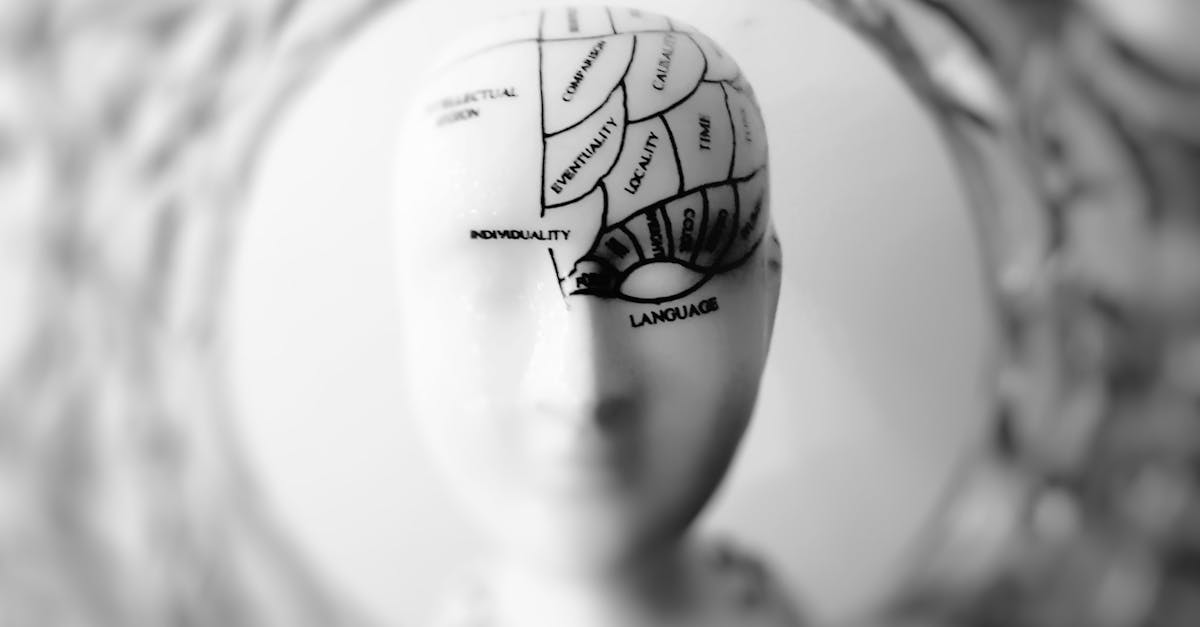


Artificial intelligence systems are increasingly used to generate scientific results, including hypotheses, data analyses, simulations, and even full research papers. These systems can process massive datasets, identify patterns faster than humans, and automate parts of the scientific workflow that once required years of training. While these capabilities promise faster discovery and broader access to research tools, they also introduce ethical debates that challenge long-standing norms of scientific integrity, accountability, and trust. The ethical concerns are not abstract; they already affect how research is produced, reviewed, published, and applied in society.
Authorship, Credit, and Responsibility
One of the most immediate ethical debates concerns authorship. When an AI system generates a hypothesis, analyzes data, or drafts a manuscript, questions arise about who deserves credit and who bears responsibility for errors.
Traditional scientific ethics presumes that authors are human researchers capable of clarifying, defending, and amending their findings, while AI systems cannot bear moral or legal responsibility. This gap becomes evident when AI-produced material includes errors, biased readings, or invented data. Although several journals have already declared that AI tools cannot be credited as authors, debates persist regarding the level of disclosure that should be required.
Key concerns include:
- Whether researchers should disclose every use of AI in data analysis or writing.
- How to assign credit when AI contributes substantially to idea generation.
- Who is accountable if AI-generated results lead to harmful decisions, such as flawed medical guidance.
A widely noted case centered on an AI-assisted paper draft that ended up containing invented citations, and while the human authors authorized the submission, reviewers later questioned whether the team truly grasped their accountability or had effectively shifted that responsibility onto the tool.
Data Integrity and Fabrication Risks
AI systems are capable of producing data, charts, and statistical outputs that appear authentic, a capability that introduces significant risks to data reliability. In contrast to traditional misconduct, which typically involves intentional human fabrication, AI may unintentionally deliver convincing but inaccurate results when given flawed prompts or trained on biased information sources.
Studies in research integrity have revealed that reviewers frequently find it difficult to tell genuine data from synthetic information when the material is presented with strong polish, which raises the likelihood that invented or skewed findings may slip into the scientific literature without deliberate wrongdoing.
Ethical debates focus on:
- Whether AI-produced synthetic datasets should be permitted within empirical studies.
- How to designate and authenticate outcomes generated by generative systems.
- Which validation criteria are considered adequate when AI tools are involved.
In areas such as drug discovery and climate modeling, where decisions depend heavily on computational results, unverified AI-generated outcomes can produce immediate and tangible consequences.
Prejudice, Equity, and Underlying Assumptions
AI systems learn from existing data, which often reflects historical biases, incomplete sampling, or dominant research perspectives. When these systems generate scientific results, they may reinforce existing inequalities or marginalize alternative hypotheses.
For instance, biomedical AI tools trained mainly on data from high-income populations might deliver less reliable outcomes for groups that are not well represented, and when these systems generate findings or forecasts, the underlying bias can remain unnoticed by researchers who rely on the perceived neutrality of computational results.
Ethical questions include:
- How to detect and correct bias in AI-generated scientific results.
- Whether biased outputs should be treated as flawed tools or unethical research practices.
- Who is responsible for auditing training data and model behavior.
These concerns are especially strong in social science and health research, where biased results can influence policy, funding, and clinical care.
Transparency and Explainability
Scientific norms emphasize transparency, reproducibility, and explainability. Many advanced AI systems, however, function as complex models whose internal reasoning is difficult to interpret. When such systems generate results, researchers may be unable to fully explain how conclusions were reached.
This lack of explainability challenges peer review and replication. If reviewers cannot understand or reproduce the steps that led to a result, confidence in the scientific process is weakened.
Ethical debates focus on:
- Whether the use of opaque AI models ought to be deemed acceptable within foundational research contexts.
- The extent of explanation needed for findings to be regarded as scientifically sound.
- To what degree explainability should take precedence over the pursuit of predictive precision.
Some funding agencies are beginning to require documentation of model design and training data, reflecting growing concern over black-box science.
Impact on Peer Review and Publication Standards
AI-generated results are also reshaping peer review. Reviewers may face an increased volume of submissions produced with AI assistance, some of which may appear polished but lack conceptual depth or originality.
There is debate over whether current peer review systems are equipped to detect AI-generated errors, hallucinated references, or subtle statistical flaws. This raises ethical questions about fairness and workload, as well as the risk of lowering publication standards.
Publishers are responding in different ways:
- Mandating the disclosure of any AI involvement during manuscript drafting.
- Creating automated systems designed to identify machine-generated text or data.
- Revising reviewer instructions to encompass potential AI-related concerns.
The uneven adoption of these measures has sparked debate about consistency and global equity in scientific publishing.
Dual Purposes and Potential Misapplication of AI-Produced Outputs
Another ethical issue arises from dual-use risks, in which valid scientific findings might be repurposed in harmful ways. AI-produced research in fields like chemistry, biology, or materials science can inadvertently ease access to sophisticated information, reducing obstacles to potential misuse.
For example, AI systems capable of generating chemical pathways or biological models could be repurposed for harmful applications if safeguards are weak. Ethical debates center on how much openness is appropriate in sharing AI-generated results.
Essential questions to consider include:
- Whether certain discoveries generated by AI ought to be limited or selectively withheld.
- How transparent scientific work can be aligned with measures that avert potential risks.
- Who is responsible for determining the ethically acceptable scope of access.
These debates mirror past conversations about sensitive research, yet the rapid pace and expansive reach of AI-driven creation make them even more pronounced.
Redefining Scientific Skill and Training
The growing presence of AI-generated scientific findings also encourages a deeper consideration of what defines a scientist. When AI systems take on hypothesis development, data evaluation, and manuscript drafting, the function of human expertise may transition from producing ideas to overseeing the entire process.
Key ethical issues encompass:
- Whether overreliance on AI weakens critical thinking skills.
- How to train early-career researchers to use AI responsibly.
- Whether unequal access to advanced AI tools creates unfair advantages.
Institutions are starting to update their curricula to highlight interpretation, ethical considerations, and domain expertise instead of relying solely on mechanical analysis.
Navigating Trust, Power, and Responsibility
The ethical discussions sparked by AI-produced scientific findings reveal fundamental concerns about trust, authority, and responsibility in how knowledge is built. While AI tools can extend human understanding, they may also blur lines of accountability, deepen existing biases, and challenge long-standing scientific norms. Confronting these issues calls for more than technical solutions; it requires shared ethical frameworks, transparent disclosure, and continuous cross-disciplinary conversation. As AI becomes a familiar collaborator in research, the credibility of science will hinge on how carefully humans define their part, establish limits, and uphold responsibility for the knowledge they choose to promote.